Search News
Industry Portal
Hot Articles
- How to account for water hammer in pressure piping systemsProtect pressure piping systems from water hammer. Discover how to assess surge pressures, model pump trips and valve closures, and select effective protection.
- How to choose a disinfection method for municipal drinking waterCompare water disinfection for municipal systems, from chlorine and UV to ozone. Find the right balance of safety, compliance, reliability, and cost.
- India HDPE PE100 Pipe Resin Prices Rise on Infrastructure DemandIndia HDPE PE100 pipe resin prices rise as infrastructure demand drives purchasing. Explore the impact on manufacturers’ costs and pipe pricing.
Popular Tags
Industry NewsWhen Wastewater Recycling Systems Save Money and When They Do Not
auth.
Dr. Aris AlloyTime
Apr 23, 2026Click Count
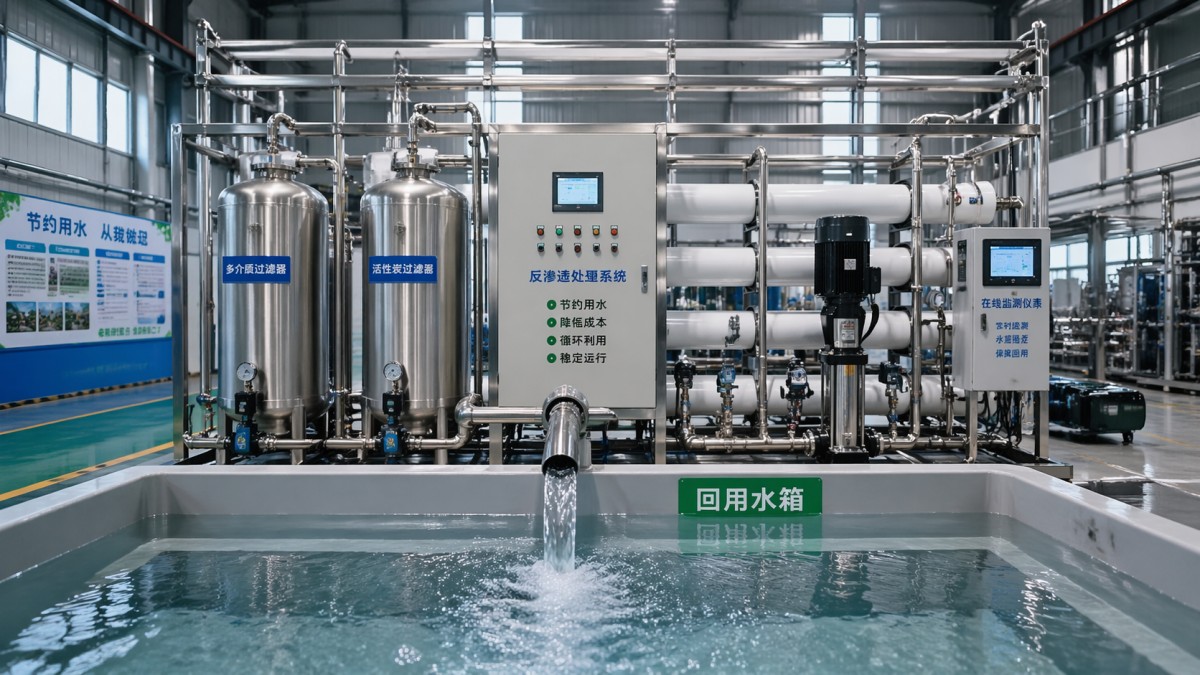
Wastewater recycling can cut Industrial Wastewater treatment cost, but the economics depend on flow profile, Regulatory Standards compliance, and technology choices such as Reverse Osmosis membrane specifications. This article explains when Industrial Wastewater recycling systems create measurable savings, when they add hidden costs, and how decision-makers can assess Advanced Water Treatment solutions within a Circular Economy in wastewater treatment framework.
When does wastewater recycling actually reduce total cost?

For many operators and decision-makers, the first mistake is to compare only discharge cost versus equipment cost. A wastewater recycling system changes the full water balance of a site. Savings may come from lower freshwater intake, lower sewer discharge, reduced environmental risk, and more stable production during supply restrictions. In practice, the business case is strongest when at least 3 cost lines improve at the same time over a 3–7 year planning period.
Industrial Wastewater recycling usually saves money when influent quality is reasonably predictable, daily flow variation is manageable, and the recovered water can displace purchased process water, cooling water, or utility water. Sites with medium to high water tariffs, recurring drought exposure, or tight discharge permits often see better economics than sites where freshwater is cheap and disposal rules are lenient.
The strongest financial cases often appear in sectors with continuous operations of 16–24 hours per day, because utilization matters. A well-sized reclaim plant loses value when it runs at 30% load for long periods. By contrast, facilities with steady loading, monthly production predictability, and clear reuse demand can spread capital and operating cost across more recovered cubic meters.
The 4 conditions that usually support a positive payback
- Freshwater purchase and wastewater discharge together create a meaningful cost burden, not just one side of the equation.
- The plant has a stable reuse outlet, such as rinse water, cooling tower makeup, boiler pre-treatment feed, or utility washing.
- Influent composition stays within a controllable design window for pH, TDS, COD, suspended solids, and membrane-fouling risk.
- Compliance pressure is increasing, making avoided penalties, avoided emergency hauling, and avoided retrofit costs part of the financial case.
G-WIC’s cross-sector benchmarking perspective is useful here because economics rarely depend on one asset alone. Membrane performance, pumping energy, sludge handling, storage buffering, online monitoring, and piping reliability interact. A reclaim project that looks attractive on a vendor brochure can become expensive if ultrasonic flow measurement, equalization volume, and reject management were under-scoped at the procurement stage.
Which site conditions make wastewater recycling uneconomic or risky?
Wastewater recycling does not automatically save money. The economics weaken when wastewater composition swings sharply across shifts, when production stoppages are frequent, or when the recovered water has no reliable internal use. A common failure pattern is installing advanced treatment for a plant that only needs occasional compliance support rather than daily reuse.
Another warning sign is underestimating pre-treatment. Reverse Osmosis and advanced polishing systems can be effective, but they are sensitive to oils, silica, scaling ions, surfactants, and shock loads. If upstream equalization, pH control, dissolved air flotation, biological treatment, or cartridge filtration is missing, membrane cleaning frequency may rise from every 2–4 months to every few weeks, which changes OPEX materially.
Low water price environments also matter. If local freshwater tariffs are low, sewer charges are modest, and discharge compliance is straightforward, then capital recovery may stretch beyond the acceptable payback window. For some facilities, a better option is process optimization, segregation of high-strength streams, or partial reuse in 1–2 utility loops rather than a full closed-loop system.
Typical hidden costs that are missed early
- Concentrate or brine management, especially where off-site disposal or evaporation is required.
- Energy demand for high-pressure pumps, thermal concentration, and sludge dewatering or drying.
- Chemical consumption for antiscalants, pH correction, coagulants, cleaning chemicals, and biocides.
- Operator training, lab verification, spares inventory, and instrumentation calibration every quarter or half-year.
For project managers and safety teams, the key point is that “recycle” is not one technology. It is a treatment train. G-WIC evaluates these systems through the wider lens of industrial sludge valorization, water conveyance hardware, digital monitoring, and regulatory exposure. That broader view helps identify when the lowest CAPEX proposal will likely produce the highest lifecycle cost.
How flow profile, water quality, and reuse target determine the right technology
Technology selection should start with three questions: how much flow must be treated, how variable is the influent, and what quality does the reuse application require? A system designed for cooling tower makeup differs from one designed for boiler feed or product-contact washing. In many facilities, 20%–40% of wastewater may be suitable for lower-grade reuse without the cost of full demineralization.
A practical engineering approach is to divide water streams into at least 3 categories: low-contamination reusable streams, medium-strength streams suitable for staged treatment, and high-strength or hazardous streams that should remain segregated. This avoids over-treating all water to one expensive standard. It also reduces membrane area, chemical consumption, and reject volume.
For quality managers, the technical risk lies in mismatch between recovered water quality and end use. If conductivity, hardness, silica, or microbial limits are tighter than the system can maintain during peak conditions, the plant may still need backup freshwater. That weakens savings. Continuous online monitoring and digital twin support can improve control, especially when flow varies across 8-hour shifts.
Common treatment trains by reuse objective
The table below summarizes how wastewater recycling systems are typically aligned with influent complexity and reuse target. It is not a substitute for pilot testing, but it helps procurement teams frame the right level of treatment before requesting quotations.
The key interpretation is simple: the closer the recovered water must come to high-purity standards, the more important upstream control becomes. A lower-grade reuse loop often offers the best first phase. Many facilities obtain stronger ROI by launching in 2 stages over 6–18 months rather than committing immediately to full ZLD.
Technical checkpoints before final selection
- Confirm at least 4–8 weeks of representative sampling across normal production, startup, and upset conditions.
- Verify whether reuse demand is continuous, seasonal, or shift-dependent.
- Check whether the design includes equalization, bypass, CIP, and reject handling rather than only the core skid.
- Review compatibility with ISO, AWWA, and EN referenced materials and instrumentation practices where applicable.
How to evaluate cost, payback, and procurement options without missing lifecycle risk
A sound procurement decision should compare at least 5 cost categories: capital equipment, civil and integration work, energy, chemicals and consumables, and residuals management. Some teams also add risk cost, such as production stoppage during water shortages, permit exceedance exposure, and emergency tanker or hauling dependence. That broader TCO view is where many projects change from “too expensive” to “strategic,” or the reverse.
For distributors, EPC teams, and end users, the most useful bid comparison is not lowest price per skid. It is cost per reliable cubic meter of reuse water over a defined period, often 3 years or 5 years. A cheaper system with poor recovery ratio, unstable flux, or frequent membrane replacement can become more expensive than a well-engineered package with stronger instrumentation and pretreatment discipline.
G-WIC’s benchmarking model is valuable because it links water treatment economics with connected assets across the plant: high-pressure piping losses, storage tank durability, sludge treatment burden, and smart water management visibility. These details matter in facilities where duty cycles run 330–350 days per year and small inefficiencies accumulate quickly.
A procurement-oriented cost comparison framework
The following table can be used during vendor evaluation, internal budgeting, or board-level approval reviews. It is especially useful when comparing conventional discharge, partial recycling, and advanced wastewater reclaim or ZLD pathways.
The table shows why there is no universal best option. Partial wastewater recycling often provides the most balanced path for first-time adopters, while advanced reclaim becomes rational when water security and compliance carry strategic value. The right choice depends on tariff structure, site uptime, water quality variability, and reuse reliability.
5 procurement questions every buyer should ask
- What is the guaranteed operating envelope for flow, conductivity, suspended solids, and temperature?
- Which parts of the system are included in price: tanks, piping tie-ins, PLC integration, online analyzers, and CIP unit?
- What membrane cleaning interval, consumables replacement window, and operator hours were assumed in OPEX?
- How will reject water, sludge, or concentrate be managed during normal and upset operation?
- Is pilot testing recommended for 2–6 weeks before committing to the final process design?
What compliance, implementation, and operating details separate strong projects from costly mistakes?
Compliance and implementation often decide whether a wastewater recycling system performs financially. A plant may meet average water quality on paper and still fail operationally if instrumentation, alarm logic, and maintenance planning are weak. For quality and safety managers, the focus should include not only permit compliance but also process stability, operator protection, chemical storage practices, and documented verification routines.
A practical rollout usually follows 4 stages: baseline audit, treatability review, pilot or validation phase, and full integration. Depending on site complexity, this can take 6–20 weeks before final procurement and installation planning. Fast projects are possible, but compressing validation too aggressively often creates expensive redesign later, especially where ZLD or reuse-critical operations are involved.
International references such as ISO-aligned management practices, AWWA guidance for water infrastructure components, and EN-based material or equipment expectations can support specification quality. They do not replace local regulation, but they help standardize procurement language and reduce ambiguity across engineering, contractor, and owner teams.
Common implementation mistakes to avoid
- Designing for average flow instead of peak hourly flow, which can overload equalization and pretreatment.
- Skipping buffer storage, leaving no resilience during membrane cleaning, maintenance, or sudden production surges.
- Treating mixed wastewater streams together when segregation would reduce cost and improve recoverability.
- Ignoring sludge and concentrate pathways until late-stage engineering, when disposal cost becomes a project blocker.
FAQ for buyers, operators, and project leaders
How long does a wastewater recycling project usually take?
For standard packaged systems, initial evaluation may take 2–4 weeks, while pilot validation may add another 2–6 weeks. Full delivery and integration vary widely by civil scope, controls integration, and permitting. The important point is not speed alone, but whether the project includes realistic commissioning, operator training, and performance verification milestones.
Is Reverse Osmosis always required?
No. RO is valuable when dissolved solids reduction or high-purity reuse is necessary, but it adds energy and concentrate management requirements. Many facilities can start with filtration, biological treatment, clarification, or disinfection for lower-grade reuse. The right answer depends on the intended reuse quality, not on technology popularity.
What is the most common commercial mistake?
The most common mistake is building a system around theoretical maximum water recovery without matching actual reuse demand. If the plant cannot consistently consume the recovered water, tank turnover drops, quality control becomes harder, and the financial model weakens. Reuse destination should be confirmed before final sizing.
Who should be involved in the decision?
At minimum, include operations, EHS, maintenance, quality, finance, and project engineering. For larger projects, procurement and sustainability leadership should also review assumptions around tariffs, ESG commitments, water risk, and expansion planning over the next 3–5 years.
Why work with a technical benchmarking partner before choosing a wastewater recycling system?
A strong wastewater recycling decision is rarely made by comparing equipment brochures alone. It requires a benchmarked view across treatment assets, piping, digital monitoring, storage, sludge handling, and compliance exposure. That is where G-WIC adds practical value. Our institutional scope covers utility-scale water treatment, Industrial Wastewater reclaim and ZLD systems, smart water management, conveyance hardware, and sludge valorization under one analytical framework.
For information researchers, we help clarify technical options without oversimplifying trade-offs. For operators and quality teams, we focus on controllable performance windows, maintenance burden, and monitoring requirements. For enterprise decision-makers and project leaders, we support structured comparison across CAPEX, OPEX, tariff risk, and regulatory pressure so the final choice aligns with both plant reality and corporate ESG commitments.
If you are evaluating whether wastewater recycling systems will save money at your site, the most useful next step is a scoped technical review. This should cover influent profile, reuse target, likely treatment train, membrane or non-membrane options, reject management, standards alignment, and a 3–5 year lifecycle cost model. That review is often more valuable than requesting generic quotations too early.
What you can contact us to discuss
- Parameter confirmation for flow profile, TDS, COD, suspended solids, pH window, and reuse quality target.
- Technology selection between partial recycling, advanced reclaim, RO-based systems, or ZLD-oriented schemes.
- Delivery scope review including tanks, instrumentation, piping hardware, digital monitoring, and commissioning needs.
- Compliance and standards discussion related to local discharge requirements and commonly referenced ISO, AWWA, or EN expectations.
- Budgetary quotation support, pilot planning, sampling strategy, and phased implementation options for complex sites.
Contact us when you need more than a product list. We can help you test whether a wastewater recycling system is financially justified, identify where hidden cost is likely to appear, and compare realistic pathways for advanced water treatment within a circular economy strategy that fits your site, risk profile, and operational priorities.
- Water Infrastructure
- Circular Economy
- Water Treatment
- Industrial Wastewater
- High-Pressure Piping
- Water Conveyance
- Smart Water Management
- Digital Twin
- Sludge Treatment
- Reverse Osmosis
- Sustainability
- Water Tariffs
- Regulatory Standards
- Technical Benchmarking
- Reverse Osmosis membrane specifications
- Circular Economy in wastewater treatment
- Advanced Water Treatment solutions
- Industrial Wastewater recycling systems
- Industrial Wastewater treatment cost
- Regulatory Standards compliance
Recommended News
TIME
{item.publish_time}{item.title}{item.description}auth.
{item.goods_category_sif3qfva9d}Read MoreCONTACT US