Search News
Industry Portal
Hot Articles
- How to evaluate a ZLD systems supplier for variable wastewater loadsChoose a ZLD systems supplier ready for variable wastewater loads. Learn how to assess operating flexibility, pilot evidence, costs, and guarantees to reduce risk and buy with confidence.
- How MWCO affects contaminant retention in pressurized UF systemsPressurized UF MWCO influences contaminant retention, flux, fouling, and downstream protection. Learn how to select the right cut-off for reliable water treatment performance.
- When does thermal drying make sense for biosolids sludge management?Biosolids Sludge Management: discover when thermal drying cuts transport costs, improves pathogen control, and creates reliable end-use value.
Popular Tags
Industry NewsHow C25 Ductile Iron Pipe Compares in Load, Lining, and Field Use
auth.
Dr. Victor GearTime
Aug 03, 2026Click Count
Why C25 Still Deserves Careful Evaluation
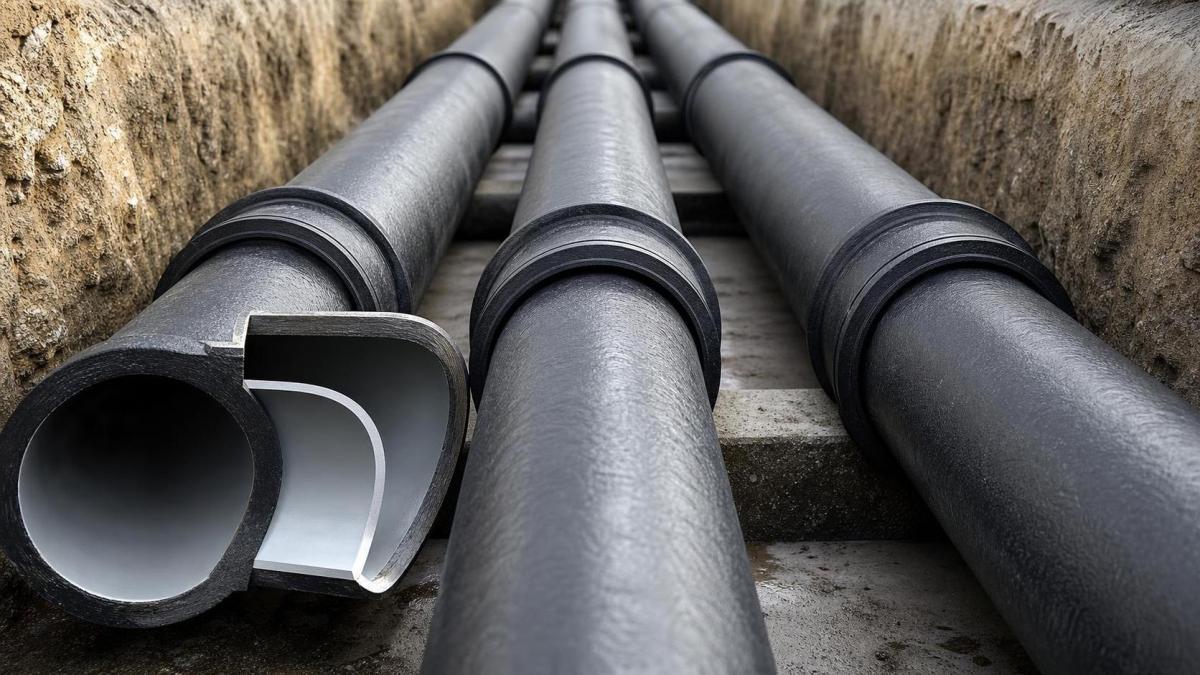
In water transmission and distribution projects, pipe selection is rarely about a single specification. Operators want stable field performance, technical reviewers want reliable structural margins, maintenance teams want lining systems that hold up over time, and quality or safety personnel need confidence that installation and service conditions will not create avoidable failure risks. That is why C25 grade ductile iron pipe remains an important topic. It sits in a part of the market where decisions are shaped by external load, internal protection, joint reliability, installation practice, and procurement discipline rather than by headline price alone.
The practical question is not simply whether a pipe meets a nominal class. The more useful question is how that class performs when trench conditions vary, when coating or lining choices affect long-term corrosion behavior, and when crews have to install, inspect, repair, or extend the line under real site constraints. In many projects, that broader view determines whether a system remains economical across its service life.
Load Performance Is About More Than Wall Thickness
For technical assessment teams, load capacity is often the first issue. However, field performance under load depends on more than the pipe class label. Buried ductile iron pipe works within a soil-pipe system. External loads from traffic, backfill, trench depth, and compaction interact with the pipe’s geometry, the bedding quality, and the continuity of support along the barrel. A pipe that appears strong on paper can still face avoidable stress concentration if trench preparation is inconsistent.
This is where C25 becomes relevant in many medium-duty utility scenarios. It is commonly evaluated where project teams need a balance between structural capability and material efficiency. Compared with lighter class selections, it may offer a more comfortable margin for installations where backfill control is not perfect, where occasional surface loading is expected, or where long-term service stability matters more than minimum initial material use.
That said, buyers should avoid assuming that a higher class automatically solves all loading concerns. If bedding is poor, if pipe handling damages the coating or spigot ends, or if trench walls are unstable, structural performance can still be affected. For site operators and supervisors, load capacity should therefore be reviewed together with handling instructions, laying sequence, and compaction controls.

Lining Choices Often Decide the Real Service Outcome
If load is the visible engineering issue, lining is often the hidden life-cycle issue. Ductile iron pipe may have good mechanical strength, but long-term reliability also depends on how the internal surface resists the conveyed medium and how the external surface responds to soil conditions. For many water-related systems, internal lining quality influences flow stability, deposit formation, and maintenance frequency. An unsuitable or poorly applied lining can increase lifecycle cost even when the pipe body itself remains structurally sound.
In practice, teams should review whether the lining system matches the fluid characteristics, expected operating temperature, and maintenance regime. For potable water and general municipal service, cement mortar lining is widely recognized, but procurement staff still need to confirm application consistency, curing quality, and surface condition at delivery. In other service environments, additional corrosion protection considerations may become more important, especially where water chemistry or soil aggressiveness raises concern.
This is one reason K9 ductile iron pipe is often discussed alongside class options such as C25. Strength, standards compliance, and procurement notes are interconnected. A pipe with strong nominal pressure or structural characteristics is only part of the answer; the lining and coating package, plus the supplier’s quality control discipline, usually determine whether the installed asset delivers the expected service interval.
Field Use Exposes the Difference Between Specification and Execution
From an operator’s perspective, field use is where theoretical comparisons become meaningful. Ductile iron remains widely valued because it is familiar to installation crews, compatible with standard municipal practice, and generally robust during handling when proper lifting and storage methods are followed. Yet some of the most important differences between acceptable and poor outcomes come from execution details: joint cleanliness, insertion depth control, trench moisture, backfill selection around the pipe zone, and protection against impact damage during unloading.
For teams reviewing C25 ductile iron pipe, the right approach is to place the product within a full installation context. That means checking not only the pipe class and dimensions, but also socket design, compatibility with fittings, tolerance consistency, surface finish, and the practicality of inspection during receipt and laying. In many projects, these field-use factors are what separate a smooth commissioning process from repeated corrective work.
After-sales and maintenance personnel should also pay attention to how easily the selected system supports future intervention. Pipelines are rarely left untouched for decades. New branches, repairs, sectional replacements, and valve chamber work may occur later. A pipe system that performs well in these routine field operations can reduce service disruption and simplify inventory planning for spare components.
What Procurement and QA Teams Should Check Before Approval
A common procurement mistake is to compare only unit prices across offers that are not truly equivalent. For C25 pipe, evaluation should include dimensional consistency, stated standards, lining and coating details, joint configuration, test documentation, and packaging condition for transport. Even where two offers appear similar, differences in process control may affect installation efficiency and later maintenance exposure.
Quality and safety personnel can usually improve outcomes by focusing on a short set of practical checks:
- Visual inspection for coating damage, edge defects, and internal lining irregularities upon delivery.
- Verification that markings, dimensions, and documentation match the approved specification.
- Confirmation that gaskets, joints, and accessories are compatible and traceable.
- Review of storage and handling conditions before installation begins.
- Site checks to ensure bedding and compaction procedures support the design assumptions.
These points are not administrative formalities. They directly affect leak risk, coating integrity, and the practical service life of the line. In many utility environments, a disciplined receiving and inspection procedure is more valuable than a late-stage attempt to resolve defects after installation.
How C25 Compares in Practical Decision-Making
When comparing C25 with other class options, project teams should think in terms of fit rather than ranking. A lighter class may be attractive in tightly controlled installations with lower structural demands. A heavier selection may be justified where load conditions are severe, trench depth is greater, or project owners want broader operating margin. C25 often enters the discussion as a middle-ground choice that can suit many buried pipeline conditions without moving immediately to more conservative and potentially more expensive alternatives.
That comparison is especially useful for mixed stakeholders. Technical reviewers can weigh class selection against design assumptions. Operators can consider how installation tolerances affect real-world performance. Maintenance teams can look at future repair convenience. Procurement managers can review whether a supplier’s manufacturing consistency supports the intended application. When all four perspectives are considered together, the decision tends to be more stable and less vulnerable to short-term cost pressure.
Common Misunderstandings to Avoid
Several misunderstandings still appear in pipe selection and field management. One is treating pipe class as a stand-alone guarantee of durability. Another is assuming that all linings within a broad category perform the same if the application process differs. A third is overlooking the effect of transport, storage, and on-site handling on final quality. Even a suitable material can underperform if pipe ends are damaged, linings are chipped, or trench support is uneven.
There is also a tendency to separate procurement from field execution. In reality, those functions should inform each other. If site teams know that certain dimensions, joints, or coatings are harder to manage under local conditions, that information should influence future purchasing decisions. A technically compliant pipe that creates repeated site difficulty may not be the best operational choice.
A Practical Review Framework
For organizations evaluating C25 for municipal, industrial, or utility projects, a practical review framework often includes four questions. First, does the class align with actual load conditions rather than assumed ideal conditions? Second, does the internal and external protection system match the service environment? Third, can installation crews maintain quality with the available equipment and site controls? Fourth, does the supplier provide enough consistency and documentation to support inspection, acceptance, and future maintenance?
These questions help move the discussion away from simple catalog comparison. They also make it easier for cross-functional teams to identify hidden risks before materials reach the trench. In many cases, the most effective procurement decision is the one that reduces uncertainty during installation and operation, not merely the one that lowers the immediate purchase figure.
Conclusion
C25 ductile iron pipe is best understood through the interaction of load behavior, lining performance, and field use realities. For users and operators, it can offer dependable service when installation quality is controlled. For technical evaluators, it should be assessed as part of a soil-pipe system rather than as an isolated product class. For maintenance and quality teams, the most important issues often involve lining integrity, handling discipline, documentation, and compatibility across the pipeline system.
In a market where durability, compliance, and operating efficiency matter together, careful comparison remains essential. Projects that review structural needs, protection systems, and practical field conditions at the same time are usually better positioned to achieve long-term pipeline stability with fewer surprises after installation.
Recommended News