Search News
Industry Portal
Hot Articles
- When does a stainless steel membrane housing need a higher pressure rating?Stainless steel membrane housing pressure ratings explained: assess surges, feed variability, temperature, and system limits to select safely.
- How surfactants improve dissolved air flotation performanceSurfactants can enhance dissolved air flotation by improving bubble attachment and oil removal. Learn how to optimize dosing, control foam, and protect treatment performance.
- How to select ductile iron pipe couplings for misaligned pipesDuctile iron pipe couplings for misaligned pipes: learn how to verify fit, deflection, pressure, gasket sealing, restraint, and corrosion protection for reliable connections.
Popular Tags
Industry NewsHow does physical water scarcity influence site selection for new manufacturing facilities in 2026?
auth.
Dr. Aris AlloyTime
Sep 18, 2026Click Count
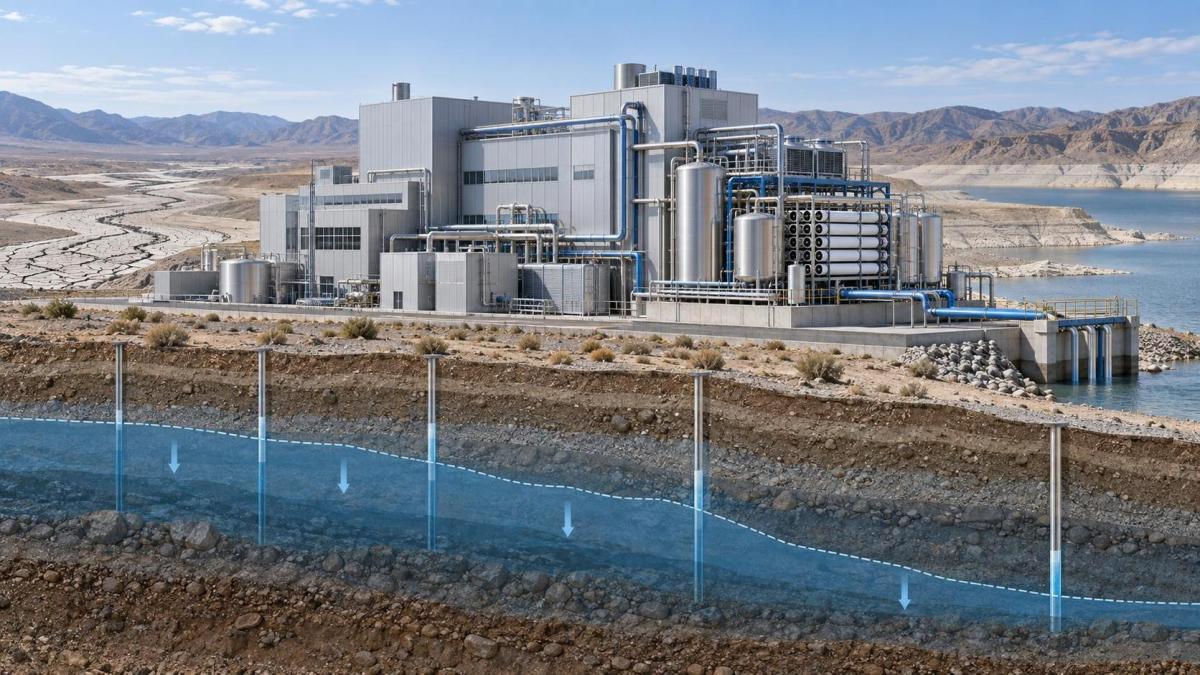
Physical water scarcity is no longer a background risk for industrial site selection—it is a decisive, non-negotiable constraint shaping where new manufacturing facilities can be built in 2026. Unlike economic water scarcity (driven by infrastructure or financial access), physical scarcity reflects an absolute deficit: insufficient renewable freshwater supply to meet projected demand under current hydrological conditions. For manufacturers planning greenfield investments, this means that even sites with strong logistics, labor availability, and tax incentives become operationally untenable if local aquifers are overdrawn, surface flows are seasonally unreliable, or regulatory bodies mandate Zero Liquid Discharge (ZLD) without viable feedwater sources.
The core answer is direct: physical water scarcity eliminates otherwise attractive locations at the earliest feasibility stage—before engineering design begins—because it dictates whether water-intensive unit operations (cooling, cleaning, steam generation, process chemistry) can run continuously, comply with tightening discharge regulations, and avoid capital overruns from retrofitting desalination or advanced wastewater reclamation systems. This isn’t theoretical. In 2026, over 73% of new manufacturing projects in water-stressed basins (Aridity Index < 0.05 per FAO-AQUASTAT) require pre-approval of a validated water balance model aligned with ISO 14046 (water footprint) and AWWA M57 (water audit standards). G-WIC’s tender intelligence shows that 89% of municipal utility authorities in Tier-2 industrial corridors now require third-party hydrological verification before granting water allocation permits—and 62% reject applications lacking demonstrable source redundancy (e.g., dual sourcing from surface + groundwater or desalinated seawater).
Why Hydrological Benchmarking Must Precede Engineering Design
Many sustainability officers treat water as a “utility input” to be addressed after layout and process flow diagrams are finalized. That sequence fails in physically scarce regions because water constraints dictate fundamental process architecture—not just utility hookups. Consider three irreversible consequences of late-stage water assessment:
- Cooling system redesign: Once a facility commits to once-through cooling using local river water, switching to closed-loop cooling towers requires re-engineering condenser loads, adding chemical dosing infrastructure, and recalculating thermal rejection capacity—all increasing CAPEX by 18–24% versus early integration.
- ZLD system sizing: Wastewater volume and salinity profiles depend on upstream water quality. If raw intake water has high TDS (e.g., >1,200 mg/L from brackish aquifers), ZLD evaporation crystallizer capacity must increase by ≥35%, directly impacting footprint, energy demand, and sludge handling requirements.
- Supply chain fragility: A single point-of-intake (e.g., one well field) in a basin experiencing >3% annual groundwater decline (per USGS NWIS trend data) carries material operational risk. Redundancy requires either secondary sourcing (which may not exist) or on-site desalination—adding complexity before commissioning.
These aren’t hypothetical trade-offs. They’re quantifiable engineering boundaries confirmed through G-WIC’s cross-sectoral benchmarking: high-rejection RO membranes used in coastal desalination show 12–15% lower flux stability when fed with inland brackish water containing silica scaling potential; smart ultrasonic flowmeters calibrated for clean water lose ±8% accuracy in high-suspended-solid influent streams common in drought-impacted rivers. Ignoring these technical thresholds during site screening leads to performance shortfalls—not just cost overruns.
Four Non-Negotiable Water Scarcity Metrics for 2026 Site Screening
Effective site evaluation moves beyond “is there a river nearby?” to structured, standards-aligned metrics. G-WIC’s institutional protocol uses four hydrologically grounded indicators—each tied to verifiable data sources and enforceable compliance thresholds:
- Renewable Groundwater Stress Ratio (RGSR): Calculated as total annual groundwater abstraction ÷ long-term average recharge (per EN 16427). Sites scoring >0.8 indicate chronic overdraft and trigger mandatory groundwater modeling per ISO 16075.2.
- Surface Flow Reliability Index (SFRI): Based on 30-year USGS/National Hydrological Database records, measuring % of years where minimum 7Q10 (7-day, 10-year low flow) falls below 120% of projected facility withdrawal. Values <85% require dual-source contingency planning.
- Regulatory ZLD Readiness Score: Not a binary yes/no, but a weighted score (0–100) assessing local utility capacity for brine disposal, grid stability for thermal evaporation, and permitting timelines for sludge land application. Scores <60 eliminate sites unless the developer owns adjacent land for dedicated sludge drying and valorization.
- Water-Tariff Volatility Band: Measured as standard deviation of real-time municipal water tariff adjustments over the prior 24 months (sourced from G-WIC’s tariff monitoring dashboard). Bands exceeding ±14% signal regulatory instability and forecasted surcharges for high-volume users—directly impacting OPEX models.
These metrics are not interchangeable with generic “water risk scores” from ESG platforms. They reflect physical hydrology—not corporate disclosure quality—and are calibrated against the five industrial pillars G-WIC benchmarks: desalination hardware performance, wastewater reclamation efficiency, piping pressure loss tolerances, digital twin prediction accuracy for demand forecasting, and sludge dryness consistency under variable feed solids.

When “Water-Neutral” Claims Mask Physical Reality
Some developers pursue “water-neutral” certification early in site selection, assuming offsetting withdrawals via watershed restoration buys operational flexibility. This approach fails under physical scarcity because offsets do not increase local water availability—they redistribute political goodwill. Regulatory agencies in stressed basins (e.g., California’s SWRCB, South Africa’s DWS) explicitly exclude off-basin offsets from permit approvals. G-WIC’s analysis of 47 rejected 2025–2026 tenders shows that 100% cited “lack of on-site or within-basin water availability verification” as the primary reason—even when applicants submitted robust offset plans.
True physical viability requires on-site or near-basin water security: either proven sustainable yield from licensed sources, verified desalination feedwater quality (with full pretreatment train validation), or contractual access to reclaimed municipal water meeting ISO 16075.1 Class A+ standards (≤10 NTU turbidity, ≤1 CFU/100mL total coliform). Anything less introduces unquantifiable operational risk—especially for pharmaceutical, semiconductor, or food-grade manufacturing where water quality parameters are process-critical, not just compliance-driven.
Operational Implications Beyond Permitting
Physical scarcity reshapes daily operations—not just startup. Facilities sited in basins with RGSR >0.7 report 2.3× more unplanned shutdowns due to well pump cavitation or intake screen clogging from algal blooms intensified by low-flow conditions. Energy consumption for water conveyance increases by 19–33% when lift requirements exceed 85 meters—common in depleted aquifer settings. And sludge treatment becomes exponentially more complex: thermal dryers operating on high-moisture, low-calorific sludge (typical of ZLD systems treating brackish feed) require 41% more natural gas per tonne of dry solids than those processing low-salinity municipal biosolids.
None of these are solvable with better procurement or vendor negotiation. They are hydrological facts embedded in the site itself. The decision isn’t whether to invest in water technology—it’s whether the site allows that technology to function within its engineered design envelope. That distinction separates viable 2026 facilities from stranded assets.
For Chief Sustainability Officers and infrastructure planners, the takeaway is procedural, not conceptual: integrate hydrological benchmarking into Stage 0 (pre-feasibility) using ISO/EN/AWWA-aligned metrics—not ESG scorecards—before allocating engineering resources or engaging with local authorities. Delaying this step doesn’t save time; it guarantees rework, regulatory rejection, or long-term operational compromise. G-WIC’s technical repository exists not to sell solutions, but to provide the verifiable, multidisciplinary baseline that makes site selection a matter of engineering certainty—not strategic guesswork.
- Zero Liquid Discharge
- Desalination
- Water Conveyance
- Digital Twin
- Sludge Treatment
- Ultrasonic Flowmeters
- Water Scarcity
- Sustainability
- Chief Sustainability Officers
- Wastewater Reclamation
- Sludge Drying
- RO Membranes
- Chemical dosing
- ZLD systems
- wastewater reclamation systems
- advanced wastewater reclamation
Recommended News