Search News
Industry Portal
Hot Articles
- How to assess a chlorination system OEM supplier's dosing accuracyAssess a chlorination system OEM supplier with confidence. Discover how to verify dosing accuracy, test conditions and control performance before you buy.
- Jordan to Highlight Water Investment Opportunities at EU ConferenceExplore Jordan water investment opportunities at the 2026 Jordan–EU Investment Conference, from desalination and wastewater treatment to energy efficiency.
- How to check sludge resource recovery compliance before land applicationSludge Resource Recovery compliance starts before land application. Learn how to verify test results, treatment records, and field-specific requirements.
Popular Tags
Industry NewsWhat Changes in Regulatory Standards Mean for Plant Upgrades
auth.
Dr. Victor GearTime
Apr 23, 2026Click Count
As regulatory standards tighten across industries, plant upgrades are no longer optional—they shape Industrial Location analysis, capital planning, and long-term competitiveness. From Regulatory Standards compliance and Reverse Osmosis membrane specifications to High-Pressure Piping design, Industrial Wastewater recycling systems, and Sludge Treatment equipment, every investment now affects Industrial Wastewater treatment cost, supplier selection, and Circular Economy in wastewater treatment strategies.
For operators, project managers, quality teams, distributors, and executive decision-makers, the practical question is no longer whether standards will change, but how fast a facility can adapt without creating downtime, compliance exposure, or stranded capital. In water-intensive industries, a delayed upgrade can influence permitting timelines, discharge fees, utility resilience, and even site viability in regions facing tightening water stress policies.
That is why plant modernization now has to be assessed through a broader lens: process performance, regulatory fit, asset life, monitoring capability, and total cost of ownership over 5- to 15-year horizons. For organizations managing desalination assets, wastewater reclaim systems, high-pressure conveyance networks, or sludge valorization units, regulatory change has become a direct engineering and procurement issue.
How Regulatory Standards Are Reshaping Plant Upgrade Priorities

Across industrial and municipal infrastructure, regulatory standards now reach deeper into plant design than in previous decades. Earlier compliance programs often focused on end-of-pipe discharge values alone. Today, many projects must address broader parameters such as water reuse ratios, energy intensity, sludge handling routes, chemical storage safety, digital traceability, and emergency containment measures.
This shift changes upgrade priorities. A facility that once planned to replace pumps or piping only at failure may now need earlier interventions to meet tighter thresholds for leakage, corrosion resistance, pressure integrity, and real-time monitoring. In practice, this means capex decisions increasingly move from reactive maintenance cycles of 10-12 years toward phased compliance upgrades every 3-5 years.
Regulatory pressure also affects industrial location decisions. In regions with stricter reuse mandates or higher discharge tariffs, plants with weak wastewater recycling capability may face structurally higher operating costs. A manufacturer comparing two locations may find that the site with stronger reclaimed water infrastructure reduces long-term compliance risk, even if initial utility pricing appears higher.
Why legacy assets become compliance bottlenecks
Legacy assets typically fail on three fronts: materials compatibility, monitoring visibility, and design margin. For example, older high-pressure piping systems may have been specified for historic flow rates and pressure ranges, but not for current redundancy requirements or higher recovery targets in reuse systems. The same applies to membrane skids designed before stricter permeate quality targets or concentrate management rules emerged.
A plant can still be functional and yet be non-resilient under new regulatory conditions. If the system requires manual sampling only once per shift, but local authorities or corporate ESG frameworks now require continuous performance records, the plant may fail audit expectations even when average water quality remains acceptable.
Typical upgrade triggers
- Discharge or reuse limits tightened by 10%-30% for TDS, COD, nutrients, or suspended solids.
- Mandatory digital logging intervals shortened from daily or shift-based reporting to hourly or real-time data capture.
- ZLD or near-ZLD requirements added for high-water-use sectors within 2- to 5-year compliance windows.
- Pressure, corrosion, and secondary containment expectations revised for chemical dosing and conveyance systems.
The table below outlines how regulatory changes usually translate into plant upgrade priorities across water-related infrastructure.
The key takeaway is that standards do not just add paperwork. They re-rank technical priorities. Plants that map regulatory change directly to asset-level risk can phase investments more intelligently and avoid emergency retrofits that cost 20%-40% more than planned upgrade programs.
What New Rules Mean for Core Water, Piping, and Sludge Systems
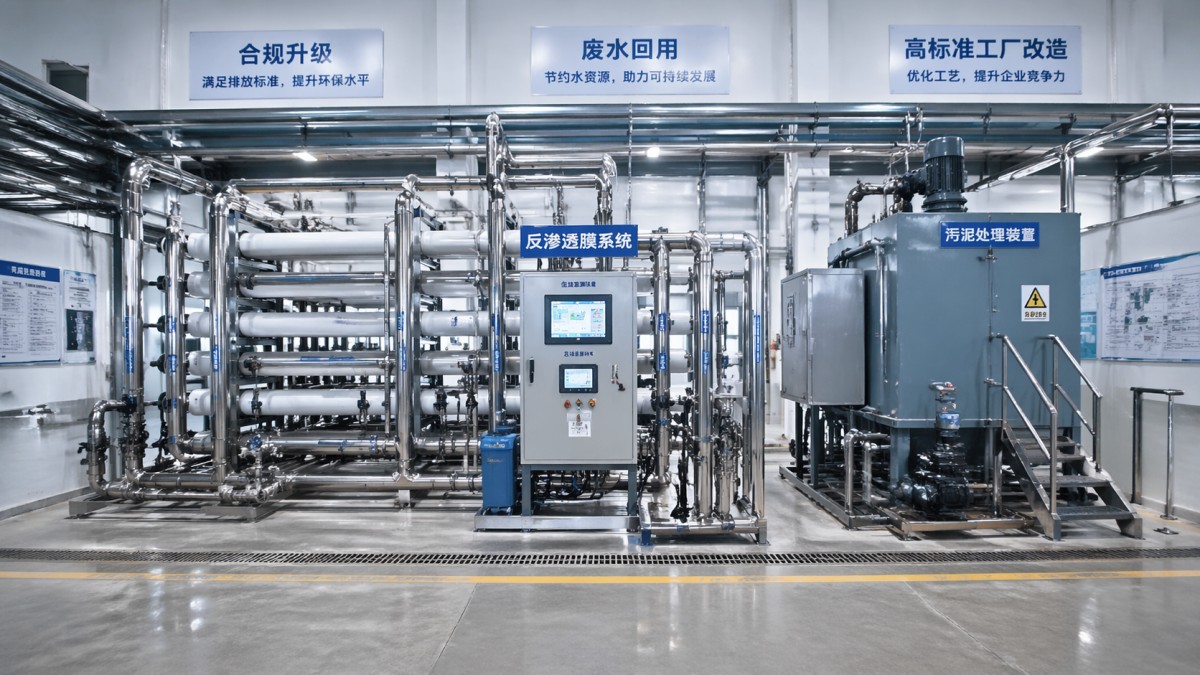
The technical impact of regulatory change is most visible in five categories: water treatment, industrial wastewater reclaim, high-pressure piping, digital monitoring, and sludge treatment. Each area has a different compliance logic, but they increasingly work as one integrated system. A stronger membrane train, for example, may increase concentrate load and therefore affect sludge handling, thermal drying requirements, or brine disposal strategies.
Reverse Osmosis specifications are a good example. Buyers once focused primarily on rejection rate and flux. Now they also need to consider cleaning frequency, membrane life under variable feedwater, compatibility with upstream pretreatment, and the auditability of performance data. In many industrial reuse projects, a 1%-2% gain in recovery can alter annual water purchase volumes significantly, but only if scaling and concentrate compliance are simultaneously managed.
High-pressure piping design is also evolving. New standards and owner specifications may require tighter tolerances on pressure ratings, improved joint reliability, more robust corrosion allowances, and clearer records for hydrotesting and inspection. For plants operating at 10 bar, 16 bar, or above 25 bar, even a modest design oversight can create both safety and compliance exposure.
System-by-system implications
- Water treatment and desalination: stronger pretreatment, membrane selection aligned with feed variability, and more frequent validation of permeate quality.
- Industrial wastewater recycling: reclaim targets may rise from 50%-60% toward 75%-90% depending on sector, which changes storage, polishing, and reject management requirements.
- High-pressure piping and tanks: materials and coatings must support longer duty cycles, chemical compatibility, and safer maintenance access.
- Sludge treatment: disposal-only models are becoming less attractive where landfill restrictions, hauling costs, or circular economy goals push plants toward dewatering, drying, or valorization.
To support specification review, the following matrix summarizes common upgrade focuses by asset category.
For buyers and operators, the practical implication is clear: no asset should be evaluated in isolation. Upgrade choices that improve one compliance metric while weakening operating cost, sludge output, or maintenance burden often create hidden lifecycle penalties.
A Better Decision Framework for Capital Planning and Supplier Selection
When standards change, many organizations default to one of two weak strategies: either they postpone decisions until enforcement becomes urgent, or they over-specify equipment without clear business justification. A stronger approach is to build a capital planning framework around compliance criticality, process impact, implementation time, and long-term operating economics.
For most plants, upgrades should be ranked across at least four decision layers. First, identify non-negotiable compliance gaps such as discharge, safety, or traceability failures. Second, measure process bottlenecks, including membrane fouling frequency, pump energy draw, or sludge hauling volume. Third, compare implementation constraints such as shutdown windows, civil rework, and operator retraining. Fourth, assess vendor reliability in documentation, spare parts, and after-sales technical support.
This matters because industrial wastewater treatment cost is shaped by more than equipment price. A lower-cost system that needs membrane cleaning every 2 weeks instead of every 6-8 weeks, or that increases sludge mass by 15%-25%, may deliver a worse total cost profile over 36 months. In regulated environments, documentation quality also has monetary value because weak traceability can slow approvals and create revalidation work.
Four procurement questions that reduce upgrade risk
- Can the supplier map the equipment specification to the applicable standards, pressure class, material compatibility, and inspection requirements?
- What is the realistic maintenance interval for critical consumables over 12, 24, and 36 months?
- How much integration risk exists with the current SCADA, digital twin, or instrumentation architecture?
- What contingency options exist if feedwater quality, sludge characteristics, or operating load shifts by 10%-20%?
The comparison table below can be used as a practical procurement screen for plant upgrades under tighter regulatory standards.
For distributors and project developers, this framework also improves bid quality. A quote that addresses pressure class, water recovery, sludge management, and digital reporting obligations is more credible than one centered only on initial capex. In competitive tenders, this level of specificity often separates technically acceptable offers from commercially durable solutions.
Implementation, Risk Control, and Digital Monitoring in the Upgrade Phase
Even the right specification can fail if implementation is poorly sequenced. Plant upgrades under revised regulatory standards should be treated as controlled transitions, not simple equipment swaps. In most cases, a 5-step delivery structure works better than an ad hoc retrofit model: baseline audit, gap prioritization, detailed engineering, phased installation, and performance verification.
A baseline audit should capture at least 6 categories of information: current water balance, discharge performance, pressure envelope, critical material compatibility, operator routines, and data visibility. Without this foundation, teams often under-budget integration tasks such as valve replacement, control logic updates, or sludge transfer modifications. These hidden interfaces can account for 10%-25% of total retrofit complexity.
Digital monitoring is becoming central to compliance execution. Smart ultrasonic flowmeters, pressure transmitters, conductivity sensors, and digital twin platforms help plants move from periodic validation to continuous verification. This does not eliminate the need for laboratory confirmation, but it reduces blind spots between manual samples and enables faster response when recovery rates, fouling indicators, or pumping loads drift outside target ranges.
Common implementation risks
- Underestimating shutdown needs, especially where high-pressure piping replacement requires hydrotesting and staged recommissioning.
- Assuming old instrumentation can support new reporting intervals or higher accuracy thresholds.
- Improving reuse recovery without fully redesigning reject, sludge, or brine handling capacity.
- Treating operator training as optional, even though the first 30-90 days after startup usually define actual system stability.
Practical rollout sequence
A disciplined rollout normally starts with a 2- to 6-week diagnostic stage, followed by detailed design and procurement over 4-12 weeks, depending on scope. Installation may then be staged around planned outages, seasonal demand patterns, or partial line isolation. Plants with limited downtime tolerance often prioritize modular skids, preassembled piping sections, and factory-tested control panels to reduce field uncertainty.
Verification should not stop at mechanical completion. Teams should define at least 3 acceptance layers: equipment integrity, process performance, and reporting readiness. For example, a wastewater reclaim line may pass a pressure test yet still fail project intent if conductivity trends, sludge dryness, or digital logging reliability do not meet the required range during the first 14-30 operating days.
For organizations managing multiple sites, digital benchmarking adds further value. Comparing membrane cleaning intervals, specific energy use, sludge output per cubic meter treated, and alarm frequency across plants helps prioritize the next upgrade cycle with more confidence and less guesswork.
FAQ: What Buyers, Operators, and Project Teams Ask Most Often
In regulated water and wastewater infrastructure, recurring questions tend to center on timing, scope, cost exposure, and supplier fit. The answers below reflect common planning conditions rather than one-size-fits-all claims.
How do we know whether a plant needs a full upgrade or a phased retrofit?
Start with a gap assessment covering compliance risk, asset condition, and operating cost. If 1 or 2 subsystems create most of the risk, a phased retrofit may be enough. If multiple systems are interdependent, such as RO, brine management, and sludge drying, a fragmented approach can raise lifecycle cost. Many sites use a 12- to 24-month phased plan to spread capex while still hitting compliance deadlines.
What should we look at first in industrial wastewater treatment cost?
Do not focus only on purchase price. Review energy demand, chemical consumption, membrane or media replacement cycles, sludge volume, cleaning downtime, and data/reporting workload. In many cases, these six items determine whether a system remains economical after 18-36 months of operation.
How long does a compliance-driven upgrade usually take?
Smaller instrumentation or control upgrades may be completed in 4-10 weeks. Membrane retrofits, piping replacements, or sludge equipment integration often require 3-9 months, especially when civil work, procurement lead times, or shutdown planning are involved. Large ZLD-related transformations may run longer if thermal systems, storage, or utility tie-ins must be expanded.
Are stricter standards always bad for plant economics?
Not necessarily. While compliance can raise short-term capex, it can also reduce long-term water purchases, improve recovery, lower discharge fees, and strengthen site resilience in water-stressed regions. Plants that combine regulatory alignment with better process control often gain more stable operating performance and stronger asset value over time.
Regulatory standards are changing the economics and engineering logic of plant upgrades across water treatment, industrial wastewater reclaim, high-pressure piping, smart monitoring, and sludge treatment. The most successful organizations are not waiting for compliance pressure to peak. They are using structured audits, lifecycle-based procurement, and digitally supported implementation to reduce risk and build more resilient infrastructure.
For teams evaluating industrial location, supplier qualification, capital planning, or circular economy in wastewater treatment, a clear upgrade roadmap now matters as much as equipment performance itself. If you need support comparing options, refining technical specifications, or building a practical compliance-driven upgrade strategy, contact us to get a tailored solution and explore more water-infrastructure and circular-industrial insights.
- Water Infrastructure
- Circular Economy
- Water Treatment
- Desalination
- Industrial Wastewater
- High-Pressure Piping
- Digital Twin
- Sludge Treatment
- Reverse Osmosis
- Ultrasonic Flowmeters
- Regulatory Standards
- Industrial Location
- Reverse Osmosis membrane specifications
- Circular Economy in wastewater treatment
- Industrial Wastewater recycling systems
- Sludge Treatment equipment
- High-Pressure Piping systems
- Industrial Wastewater treatment cost
- High-Pressure Piping design
- Regulatory Standards compliance
- Industrial Location analysis
Recommended News
TIME
{item.publish_time}{item.title}{item.description}auth.
{item.goods_category_sif3qfva9d}Read MoreCONTACT US