Search News
Industry Portal
Hot Articles
- Seawater Desalination System Factory Selection: 7 Mistakes That Delay CommissioningSeawater desalination system factory selection can make or break commissioning. Discover 7 costly mistakes, key checklist points, and smarter ways to compare suppliers.
- Dissolved Air Flotation (DAF) Wholesale: What to Check Beyond the Quoted PriceDissolved air flotation (DAF) wholesale is about more than price. Learn how to compare performance, materials, sludge handling, compliance, and service to avoid hidden costs.
- Choosing a Chlorination System OEM Supplier Without Creating Maintenance HeadachesChlorination system OEM supplier selection affects uptime, spares, and service costs. Learn how to avoid maintenance headaches with a practical, lifecycle-focused evaluation guide.
Popular Tags
Industry NewsSludge Treatment Equipment Sizing Mistakes That Hurt Dewatering
auth.
Dr. Elena HydroTime
Apr 23, 2026Click Count
Sludge Treatment equipment is often blamed for poor dewatering, but sizing mistakes are usually the real cause. From Industrial Wastewater treatment cost overruns to Regulatory Standards compliance risks, incorrect capacity assumptions can undermine performance, safety, and long-term value. This article explains the most damaging sizing errors and how they affect operators, project managers, and decision-makers across modern Industrial Wastewater recycling systems.
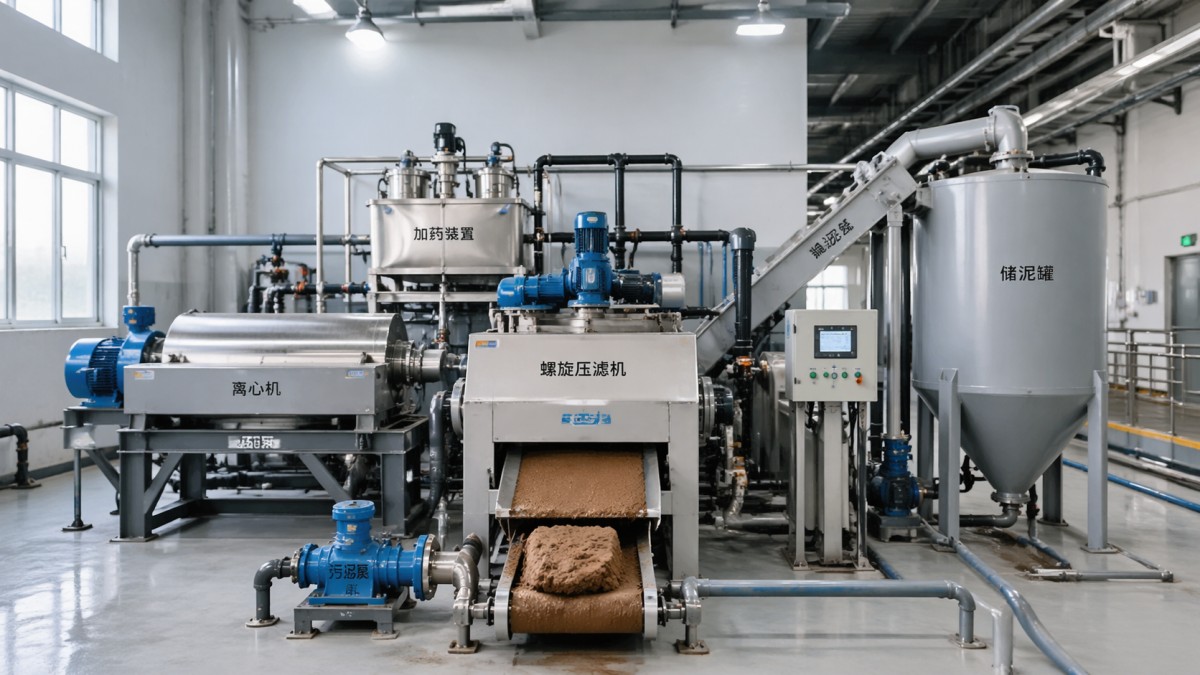
In practice, dewatering performance is rarely determined by one machine alone. Belt filter presses, centrifuges, screw presses, filter presses, polymer preparation units, sludge pumps, thickeners, storage tanks, conveyors, and dryers must be sized as a connected process. If one component is undersized by 15% or oversized by 30%, the whole sludge line can suffer from unstable cake solids, excessive polymer use, poor filtrate quality, and unplanned downtime.
For industrial users, utilities, EPC contractors, and technology distributors, sizing errors also affect lifecycle economics. A system designed only around average flow instead of peak solids load may meet startup expectations for 2 to 4 weeks, then fail once production changes, seasonal variability appears, or sludge characteristics drift. That is why sludge treatment equipment sizing must be based on solids mass balance, variability, redundancy, and compliance targets rather than on nameplate throughput alone.
Why Dewatering Fails When Capacity Assumptions Are Wrong

Many procurement teams begin with a simple question: “How many cubic meters per hour should the dewatering machine handle?” That is useful, but incomplete. Sludge dewatering depends more on dry solids per hour, inlet consistency, fiber or grease content, and operating hours per day than on hydraulic flow alone. A centrifuge rated for 20 m³/h can perform very differently at 0.8% solids versus 3.0% solids, even before polymer optimization is considered.
A common mistake is sizing equipment using average daily sludge generation while ignoring peak events. In food processing, chemical manufacturing, textiles, mining support systems, and municipal-industrial mixed treatment plants, peak sludge loads can be 1.5 to 3 times the monthly average. If the design basis does not include shock loading, cleaning cycles, or batch discharge events, operators are forced to run longer shifts, increase polymer dosage, or recycle inadequately thickened sludge back upstream.
Another failure mode comes from assuming stable sludge properties. In reality, volatile solids, ash content, pH, temperature, and floc strength can change from week to week. A system designed around one grab sample may be inaccurate within 30 days if influent chemistry, coagulant dosing, biological activity, or equalization performance changes. Poor sizing then appears as a dewatering problem, even though the root cause is inadequate design basis data.
Decision-makers should also note that poor sizing creates secondary risks beyond cake dryness. It can increase wash water demand, overload odor control systems, accelerate wear on pumps and bearings, and reduce compliance margin for transport, landfill, incineration, composting, or sludge valorization routes. In plants targeting water reuse or ZLD, every percentage point of missed solids capture can trigger higher recirculation loads and downstream cost escalation.
Four variables that matter more than nameplate flow
- Dry solids throughput, usually expressed in kg DS/h or t DS/day, is the primary sizing variable for most dewatering equipment.
- Feed solids concentration, often ranging from 0.5% to 8%, changes machine loading, polymer response, and filtrate clarity.
- Operating schedule, such as 8, 16, or 24 hours per day, directly affects required installed capacity and redundancy philosophy.
- Required cake solids and capture rate, for example 18% to 35% cake solids and above 95% solids capture, determine achievable design limits.
The Most Damaging Sizing Mistakes in Sludge Treatment Equipment
The first major mistake is confusing hydraulic throughput with solids handling capacity. A sludge pump, thickener, and dewatering unit may all pass the required liquid volume, yet still fail to process the daily solids mass. This usually appears when sludge thickening is weaker than expected and the dewatering unit receives 30% to 80% more water than intended. The machine is not “too small” in a general sense; it is mismatched to the actual solids concentration profile.
The second mistake is underestimating sludge storage and buffering time. In many projects, engineers size the dewatering unit correctly but provide only 2 to 4 hours of sludge holding capacity. That is risky. If polymer make-down fails, a conveyor trips, or a centrifuge requires maintenance, the plant may lose operating flexibility within one shift. A more resilient design often includes 8 to 24 hours of buffer storage, depending on sludge generation pattern and regulatory response time.
The third mistake is oversizing equipment for “future growth” without checking minimum turndown and process stability. Oversized systems often operate at partial load, where floc formation is inconsistent, residence time is too short or too long, and energy per ton of dry solids increases. A belt press or centrifuge running at 35% of its optimum loading window may perform worse than a smaller machine operating at 75% to 90% of design point.
The fourth mistake is treating polymer systems as accessories rather than integral capacity elements. If polymer aging, dilution water pressure, and dosing range are not matched to the solids profile, even a well-sized dewatering unit can deliver poor cake solids. In many plants, polymer preparation tanks sized for only 30 to 45 minutes of effective aging limit dewatering efficiency, especially when sludge chemistry changes quickly.
Common sizing mistakes and their operational impact
The table below summarizes frequent design errors that reduce dewatering efficiency across industrial wastewater and sludge valorization projects.
The key lesson is that sizing mistakes do not remain isolated. They cascade through polymer consumption, labor planning, truck-out frequency, odor management, spare parts strategy, and even permit compliance. A correction made at the design stage is usually far less expensive than repeated process troubleshooting after commissioning.
What operators usually see first
- Cake solids fluctuate more than 3 to 5 percentage points across shifts.
- Polymer consumption rises 10% to 25% without a stable improvement in capture.
- Machine throughput drops during high-temperature or high-fiber production periods.
- Operators increase run hours or weekend operation to recover missed solids load.
How to Size for Real Sludge Variability, Not Ideal Conditions
A reliable sizing process starts with mass balance. Instead of asking only how much sludge volume arrives, ask how many kilograms of dry solids must be processed per hour, per shift, and per worst-case day. Then translate that load through each stage: thickening, conditioning, dewatering, cake transfer, storage, and disposal or thermal drying. In many projects, this single discipline reveals a 20% to 40% mismatch between expected and actual system demand.
The second step is variability mapping. At minimum, teams should collect data across 3 conditions: normal operation, peak production, and upset or cleaning events. Where possible, 8 to 12 weeks of composite sampling is far better than one-time spot testing. This is particularly important for industrial wastewater facilities with changing raw materials, campaign production, or multi-line manufacturing, where sludge rheology may shift significantly within one month.
The third step is defining the performance target clearly. If the plant requires 25% cake solids for economical transport, the sizing basis should not assume test results achieved only under ideal polymer tuning. Likewise, if filtrate return quality affects the biological stage or membrane system, solids capture target should be written into the process basis, often at 95% to 98% depending on downstream sensitivity.
The fourth step is checking utilities and support equipment. Compressed air, wash water, polymer dilution water, electrical load, ventilation, and automation response times all influence practical throughput. A dewatering unit may look sufficient on paper, yet lose 10% to 15% effective capacity because the polymer skid cannot keep pace or the cake conveyor becomes the real bottleneck.
Recommended design basis inputs
Before selecting any sludge treatment equipment, teams should align on the minimum dataset below. This reduces the risk of under-sizing or investing in unnecessary capacity.
When these inputs are documented early, process suppliers, EPC teams, and owners can compare technologies on a like-for-like basis. That improves procurement quality and reduces disputes during factory testing, site acceptance, and post-startup optimization.
A practical 5-step sizing workflow
- Quantify dry solids production by source and by time period.
- Define low, average, and peak feed consistency scenarios.
- Set target cake solids, capture, operating hours, and redundancy level.
- Check support systems, including polymer, pumps, conveyors, and storage.
- Validate the design basis through pilot testing or representative historical data.
Procurement, Compliance, and Lifecycle Cost Implications
Sizing errors often become visible in the operating budget before they become obvious in engineering reports. If cake dryness is 4 percentage points below target, transport volumes can rise materially over a year. If a plant ships sludge three times per week, even a modest increase in water retained in cake can lead to dozens of extra truck movements annually. For facilities facing high landfill fees, incineration tariffs, or strict storage limits, this is not a minor efficiency issue but a strategic cost driver.
Compliance is another critical factor. Where regulatory standards require controlled handling, odor mitigation, pathogen reduction, or stable solids capture, under-sized or poorly balanced systems create repeated nonconformity risks. This is especially important in industrial parks, municipal-industrial shared plants, and export-oriented manufacturing sites where ESG reporting and permit adherence influence corporate reputation as well as plant uptime.
For project managers and engineering leads, the challenge is balancing CAPEX with resilience. Buying the lowest-capacity machine that passes a nominal test point may reduce initial spend by 5% to 12%, but that saving can disappear within one or two operating years through polymer overuse, overtime labor, maintenance frequency, and emergency hauling. Lifecycle-based procurement usually delivers stronger value than the lowest initial equipment quotation.
Distributors and agents should also be careful when translating vendor brochures into bid documents. Rated capacity must be tied to actual sludge type, target cake solids, and operating assumptions. A technically correct but context-free rating can mislead buyers and expose the supply chain to disputes during performance verification.
What buyers should compare before awarding a sludge dewatering package
The procurement table below helps compare options beyond headline throughput and purchase price.
This comparison framework helps owners and integrators avoid short-term decisions that create long-term inefficiencies. In sludge treatment, the cheapest sizing assumption is often the most expensive operational outcome.
Red flags during bid review
- Capacity is quoted without feed solids range or dry solids basis.
- Polymer system sizing is missing, generic, or detached from throughput.
- No allowance exists for maintenance bypass, duty/standby logic, or sludge storage.
- Performance guarantees are based only on factory conditions, not site variability.
FAQ and Practical Actions for Better Sizing Decisions
Teams that want better dewatering results do not always need larger equipment. More often, they need a better design basis, realistic operating assumptions, and process integration across the full sludge line. The questions below reflect common search intent from operators, buyers, quality managers, and project owners evaluating sludge treatment equipment.
How much safety factor should be added when sizing sludge dewatering equipment?
There is no universal number, but many projects assess a practical margin of 10% to 25% after variability is already built into the solids load cases. The goal is not blind oversizing. The goal is resilience against realistic fluctuations in solids concentration, production campaigns, and maintenance windows. If variability is poorly characterized, adding a large margin can hide uncertainty instead of solving it.
Is pilot testing necessary for every project?
Not always, but pilot or representative bench testing becomes highly valuable when sludge composition is complex, mixed, seasonal, oily, or chemically unstable. It is especially useful where target cake solids, polymer cost, or downstream thermal drying economics are sensitive. For medium to large projects, a short pilot campaign can reduce rework risk far more effectively than relying only on brochure data.
What is the most overlooked part of a dewatering package?
In many installations, the most overlooked elements are polymer preparation, sludge storage, and cake handling. A press or centrifuge may be selected carefully, but if polymer aging is inadequate, storage is too small, or conveyors cannot clear peak production, the system still underperforms. That is why package-level sizing is more reliable than machine-by-machine procurement.
How often should the sizing basis be reviewed after startup?
A first formal review is often useful within 60 to 90 days of stable operation, followed by annual reassessment or earlier if feed chemistry, production volume, or disposal route changes. Plants that are moving toward higher water reuse, stricter ESG controls, or ZLD objectives should review sludge line capacity whenever upstream treatment chemistry is materially modified.
Correctly sized sludge treatment equipment improves more than dewatering. It strengthens process reliability, supports compliance, reduces avoidable OPEX, and protects long-term asset value across industrial wastewater recycling systems. For organizations evaluating upgrades, new projects, or troubleshooting persistent dewatering issues, a structured review of solids load, variability, support systems, and lifecycle cost is the fastest route to better decisions. To assess your sludge line more accurately, contact us for a tailored sizing review, equipment comparison, or application-specific solution guidance.
Last:NoneNext :NoneRecommended News