Search News
Industry Portal
Hot Articles
- Seawater Desalination System Factory Selection: 7 Mistakes That Delay CommissioningSeawater desalination system factory selection can make or break commissioning. Discover 7 costly mistakes, key checklist points, and smarter ways to compare suppliers.
- Dissolved Air Flotation (DAF) Wholesale: What to Check Beyond the Quoted PriceDissolved air flotation (DAF) wholesale is about more than price. Learn how to compare performance, materials, sludge handling, compliance, and service to avoid hidden costs.
- Choosing a Chlorination System OEM Supplier Without Creating Maintenance HeadachesChlorination system OEM supplier selection affects uptime, spares, and service costs. Learn how to avoid maintenance headaches with a practical, lifecycle-focused evaluation guide.
Popular Tags
Industry NewsSludge Treatment Equipment Choices That Raise Operating Costs
auth.
Dr. Elena HydroTime
Apr 23, 2026Click Count
Choosing the wrong Sludge Treatment equipment can quietly drive up Industrial Wastewater treatment cost, reduce process efficiency, and complicate Regulatory Standards compliance. For operators, project managers, and decision-makers evaluating Advanced Water Treatment solutions, this guide explains how equipment selection affects lifecycle performance, integration with Industrial Wastewater recycling systems, and broader Circular Economy in wastewater treatment goals.
In sludge handling, the costliest mistakes are rarely the obvious ones. A press that looks inexpensive at purchase may require 20% more polymer, a dryer sized for peak flow may sit underloaded for 8 months a year, and a centrifuge chosen without solids variability data may consume excessive power while still missing dryness targets. These decisions affect not only disposal cost, but also reuse opportunities, odor control, operator safety, and downstream water recovery performance.
For municipal utilities, food processors, chemical plants, mining sites, and ZLD-oriented manufacturers, sludge equipment selection should be treated as a lifecycle design decision rather than a simple mechanical purchase. The right choice depends on feed solids, particle characteristics, dewatering goals, energy price, labor availability, footprint constraints, and compliance obligations. The sections below break down where operating costs rise, which selection criteria matter most, and how to build a more resilient sludge treatment strategy.
Why Sludge Equipment Decisions Have an Outsized Effect on Operating Cost

Sludge treatment usually represents only one part of a total wastewater system, yet it can account for a disproportionately high share of variable cost. In many facilities, sludge handling influences 25%–55% of wastewater OPEX once hauling, polymer, power, labor, cleaning water, and maintenance downtime are included. That is why a poor equipment fit often remains hidden during procurement but becomes highly visible after 6–12 months of operation.
Operating cost rises when equipment is selected around nameplate capacity alone. A machine rated for 15 m³/h may perform well on stable biological sludge but struggle with oily, fibrous, or mineral-laden sludge. When feed solids vary from 0.8% to 4.5%, the same unit may require repeated tuning, more wash cycles, and extra conditioning chemicals. The result is unstable cake dryness, more operator intervention, and higher disposal fees per ton.
Another common issue is choosing equipment without considering the full process chain. A dewatering system that produces 18% cake solids instead of 25% may look acceptable on paper, but if transport distance is 80–150 km, the hauling cost difference can be substantial. Likewise, poor filtrate quality can increase return load to the headworks, which raises aeration demand and affects biological treatment stability.
The hidden cost categories buyers often miss
Many teams compare only capital price, then underestimate the recurring cost structure. In reality, sludge treatment equipment should be evaluated across at least 7 cost lines: energy, chemical conditioning, wear parts, wash water, labor, downtime, and final solids handling. A lower upfront bid can become the higher-cost option within 18–36 months if one or two of these lines are poorly controlled.
- Energy demand: centrifuges, thermal dryers, and screw presses vary widely, from low single-digit kWh/m³ for dewatering to much higher thermal loads for drying.
- Conditioning chemical use: polymer demand can shift by 10%–40% depending on sludge type and machine selection.
- Maintenance frequency: wear on scrolls, bearings, screens, belts, and seals can create unplanned stoppages every 3–9 months if solids are abrasive.
- Cake disposal and transport: each 1%–3% gain in dryness can materially reduce tonnage sent off-site.
The comparison below shows how selection errors create long-term cost escalation, especially in facilities with fluctuating sludge characteristics or strict discharge and solids management targets.
The key takeaway is that sludge equipment should be judged by cost per dry solids handled and process stability over time, not by nominal throughput alone. This is especially important for facilities pursuing reuse, ZLD integration, or stricter ESG-driven waste reduction targets.
Common Equipment Choices That Quietly Increase OPEX
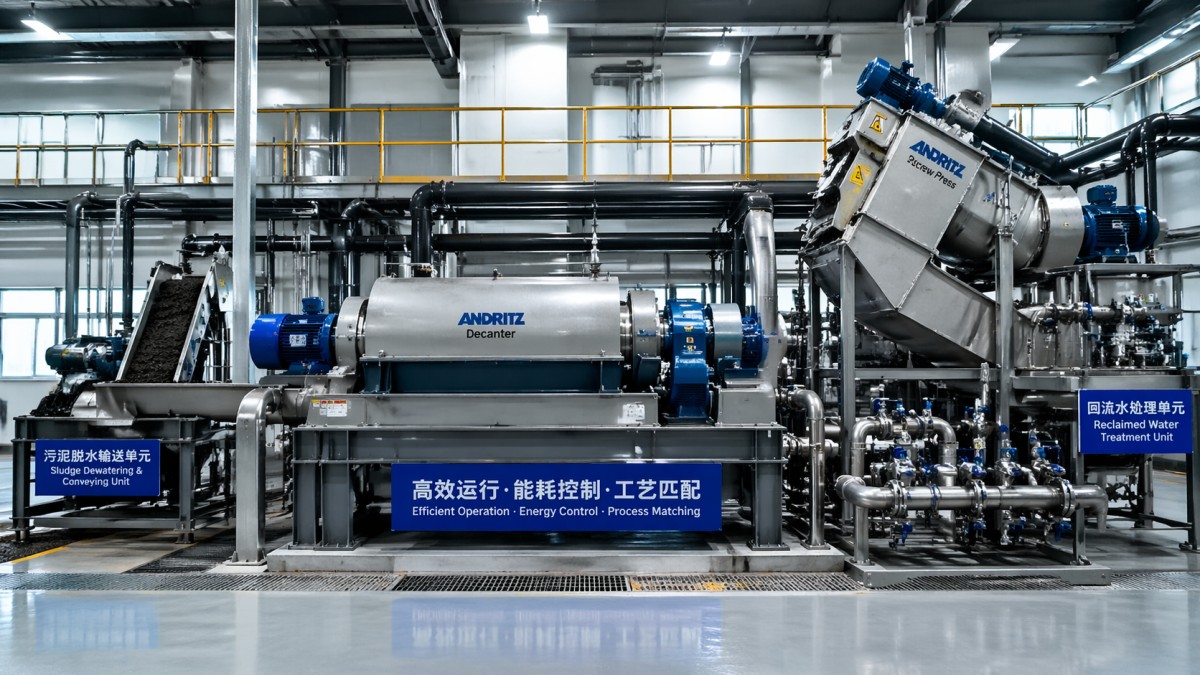
Some equipment categories are not inherently wrong, but they become expensive when applied in the wrong sludge profile or operating context. Belt filter presses, centrifuges, screw presses, plate-and-frame filter presses, and thermal dryers all have valid roles. Problems arise when buyers match them to budget assumptions instead of solids characteristics, discharge targets, staffing model, and maintenance capability.
Mistake 1: Choosing high-speed dewatering without accounting for wear and energy
High-speed centrifuges offer compact footprint and good automation, but in abrasive sludge they can drive significant wear-related costs. If grit, scale, or mineral fines are present, wear protection and replacement intervals matter. A facility that runs 16–20 hours per day may face major service events far sooner than expected if pretreatment is weak. Without solids characterization and wear budgeting, energy and parts costs can exceed the perceived benefit of compact design.
Where this usually goes wrong
This issue is common in mining effluent, metal finishing, and mixed industrial sludge where density fluctuates sharply. The machine may still operate, but torque spikes, vibration control, and inconsistent cake dryness create hidden cost through downtime and operator response burden.
Mistake 2: Selecting low-energy presses but underestimating polymer dependence
Screw presses and some low-speed systems are attractive because they often reduce power consumption and noise. However, some sludge types need tighter conditioning to maintain acceptable solids capture. If polymer optimization is not tested at pilot scale, apparent energy savings can be offset by 15%–35% higher flocculant demand, particularly when feed solids are low or sludge contains fats, surfactants, or biological instability.
Mistake 3: Installing thermal drying where only dewatering is economically justified
Thermal dryers can raise cake solids dramatically and support sludge valorization, but they are not always the right first step. If disposal routes accept mechanically dewatered sludge and transport distances are short, the thermal load may not be justified. Drying becomes more attractive when landfill gate fees are high, biosolids reuse is viable, or final product requirements demand lower moisture. In other words, drying should follow a disposal and recovery strategy, not lead it.
The table below provides a practical view of where common technology choices fit and where they tend to create unnecessary operating burden.
No single technology is universally cheaper. The lowest operating cost usually comes from matching the machine to sludge variability, staffing level, target cake solids, and disposal or reuse pathway. That alignment matters more than broad assumptions such as “centrifuges are expensive” or “screw presses are always lower cost.”
How to Evaluate Sludge Treatment Equipment Before Procurement
A sound procurement process starts with characterization, not quotations. At minimum, teams should collect 3–6 months of sludge data covering total solids, volatile solids, ash content, particle size tendency, oil and grease, pH, temperature, and daily flow variation. If seasonal production changes are significant, wet and dry season samples should be reviewed separately. These inputs determine whether the proposed equipment will stay efficient under real operating conditions.
Five technical checks that reduce lifecycle risk
- Verify cake solids target against disposal route. A difference between 20% and 28% solids can materially alter transport tonnage and drying need.
- Review centrate or filtrate quality. High return loads can raise upstream treatment cost and upset biological processes.
- Assess automation level versus staffing. A highly automated system still needs cleaning, chemical dosing control, and alarm response.
- Map utility demand, including power, wash water, compressed air, and heat where relevant.
- Confirm maintenance access, spare parts lead time, and local service capability within 24–72 hours where process continuity is critical.
Pilot testing is especially useful when sludge chemistry is unstable or when facilities are targeting reuse, incineration, co-processing, or agricultural valorization. Even a short pilot of 3–7 days can reveal polymer dose range, cake dryness, capture efficiency, and cleaning frequency. Those results often prevent expensive oversizing or the wrong equipment category altogether.
Decision criteria that matter more than brochure claims
Procurement teams should convert technical performance into comparable operating metrics. Useful examples include kWh per ton of dry solids, polymer kg per ton of dry solids, labor hours per week, wash water m³ per day, and expected maintenance intervals. These indicators create a realistic basis for comparing technologies that may otherwise look similar in marketing materials.
The following framework can help engineering, EHS, and operations teams score equipment choices consistently across technical and commercial factors.
This kind of structured review helps distributors, EPC teams, and end users avoid the common trap of choosing the “best machine” in isolation rather than the most economical solution within the total water and solids management system.
Integration With Water Reuse, ZLD, and Circular Economy Objectives
Sludge equipment should not be viewed as a terminal waste step. In modern industrial water systems, it affects the efficiency of reclaim loops, evaporator load, brine management, and resource recovery options. A poorly selected dewatering process can return more suspended solids and dissolved contaminants to the front of the plant, increasing treatment burden across membranes, clarifiers, and biological stages.
This matters even more in ZLD-oriented facilities. When every cubic meter of water is valuable, filtrate quality and solids concentration influence whether water can be recycled directly, needs additional polishing, or creates extra load on downstream concentration systems. A small degradation in sludge separation efficiency can ripple into higher RO fouling tendency, more frequent cleaning cycles, and added energy demand in thermal concentration.
Where sludge treatment supports circular value
For some industries, sludge is not just a cost center. Better solids management can support co-processing, nutrient recovery, compost blending, energy recovery, or reduced landfill dependence. These pathways require more than just dry cake; they require consistent solids quality, manageable contamination levels, and predictable moisture content. Equipment that produces unstable output can close off these options even if it appears financially attractive at the time of purchase.
Questions to ask during project planning
- Will the centrate or filtrate return to the headworks, a reclaim tank, or a polishing unit?
- Is the target to minimize disposal volume, prepare for drying, or enable a reuse outlet within 12–24 months?
- Can the chosen equipment operate efficiently under future production expansion of 15%–30% without severe oversizing today?
- Does the sludge line align with site odor control, confined space safety, dust management, and ESG reporting expectations?
Facilities that align sludge equipment with water recovery strategy often gain a double benefit: lower cost per dry ton and reduced stress on the liquid treatment train. That is particularly valuable in industrial clusters facing tariff volatility, water scarcity, or tighter landfill and emissions regulation.
Implementation, Maintenance, and FAQ for Cost-Controlled Operation
Even well-selected equipment can become expensive if commissioning, training, and maintenance planning are weak. The first 30–90 days are critical. During this period, facilities should optimize polymer type and dose, calibrate feed consistency control, confirm wash sequences, and document baseline performance for cake solids, capture rate, power use, and operator hours. Without this baseline, cost drift is difficult to detect until it becomes a budget issue.
A practical 4-step rollout approach
- Pre-start review: verify utilities, interlocks, sludge feed consistency, and safety procedures.
- Commissioning optimization: tune dose rates, residence time, torque or pressure settings, and cleaning intervals.
- Operator training: establish standard response for feed changes, alarms, and shutdown conditions.
- Performance tracking: review weekly and monthly KPI trends for at least one full operating cycle.
Preventive maintenance should be based on actual wear pattern, not a generic calendar alone. In abrasive or variable sludge, inspection intervals may need to be every 4–6 weeks at the start. For more stable biosludge applications, a monthly or quarterly routine may be enough. The right interval depends on feed profile, uptime target, and how costly unplanned downtime is for the site.
How do you know if current sludge equipment is raising costs?
Look for five warning signs: rising polymer dose without feed change, declining cake solids, more than 10% increase in power per ton of dry solids, increasing manual intervention, and repeated short stoppages for cleaning or wear-related issues. Any two of these together usually justify a process audit.
Which equipment is best for mixed industrial sludge?
There is no single best option. Mixed industrial sludge often benefits from pilot testing because oils, fines, and inorganic solids can behave very differently from municipal biosolids. A 3–7 day trial is often more valuable than broad vendor claims, especially when disposal cost is high or reuse targets are being considered.
How long is a typical procurement and implementation cycle?
For standard dewatering systems, engineering and procurement may take 6–16 weeks depending on scope and localization. Installation and commissioning can take another 2–8 weeks. Thermal systems or fully integrated sludge valorization lines usually require longer planning because heat integration, emissions control, and permitting reviews are more complex.
What should distributors and project managers prioritize when comparing suppliers?
Prioritize documented performance on similar sludge, spare parts availability, service response time, training scope, and clarity of OPEX assumptions. A bid should show not just installed power, but also expected chemical use, wash water demand, maintenance intervals, and recommended critical spares.
Sludge treatment equipment choices shape far more than one line item in a plant budget. They influence hauling cost, chemical use, operator workload, water reuse efficiency, compliance reliability, and long-term circular resource potential. When teams evaluate equipment through lifecycle cost, sludge variability, and integration with the broader wastewater system, they make better decisions and avoid avoidable OPEX escalation.
If you are assessing sludge dewatering, drying, or valorization options for municipal or industrial wastewater projects, now is the right time to compare technologies against real operating conditions rather than nominal ratings alone. Contact us to discuss your sludge profile, request a tailored evaluation framework, or explore more solutions for cost-efficient water and solids management.
- Circular Economy
- Water Treatment
- Industrial Wastewater
- Sludge Treatment
- Water Scarcity
- Industrial Water
- Municipal Utilities
- Regulatory Standards
- Circular Economy in wastewater treatment
- Advanced Water Treatment solutions
- Industrial Wastewater recycling systems
- Sludge Treatment equipment
- Industrial Wastewater treatment cost
- Regulatory Standards compliance
Recommended News