Search News
Industry Portal
Hot Articles
- How water scarcity policy shapes the case for desalination projectsWater Scarcity policy is reshaping desalination investment. Explore how resilient, low-carbon water strategies can secure supply, compliance, and long-term growth.
- How to choose charging cables that resist damage in field useCharging cables for field use: learn how to choose durable, reliable options with the right jacket, strain relief, connector fit, power rating, and moisture protection.
- Which solid-state battery breakthroughs could extend EV driving range?Solid-state battery breakthroughs for electric vehicles could transform EV range. Explore lithium-metal anodes, scalable manufacturing, fast charging, and the road to commercialization.
Popular Tags
Industry NewsDuctile Iron Pipe Standards: What Water Infrastructure Buyers Should Verify Before Ordering
auth.
Dr. Elena HydroTime
Jul 10, 2026Click Count
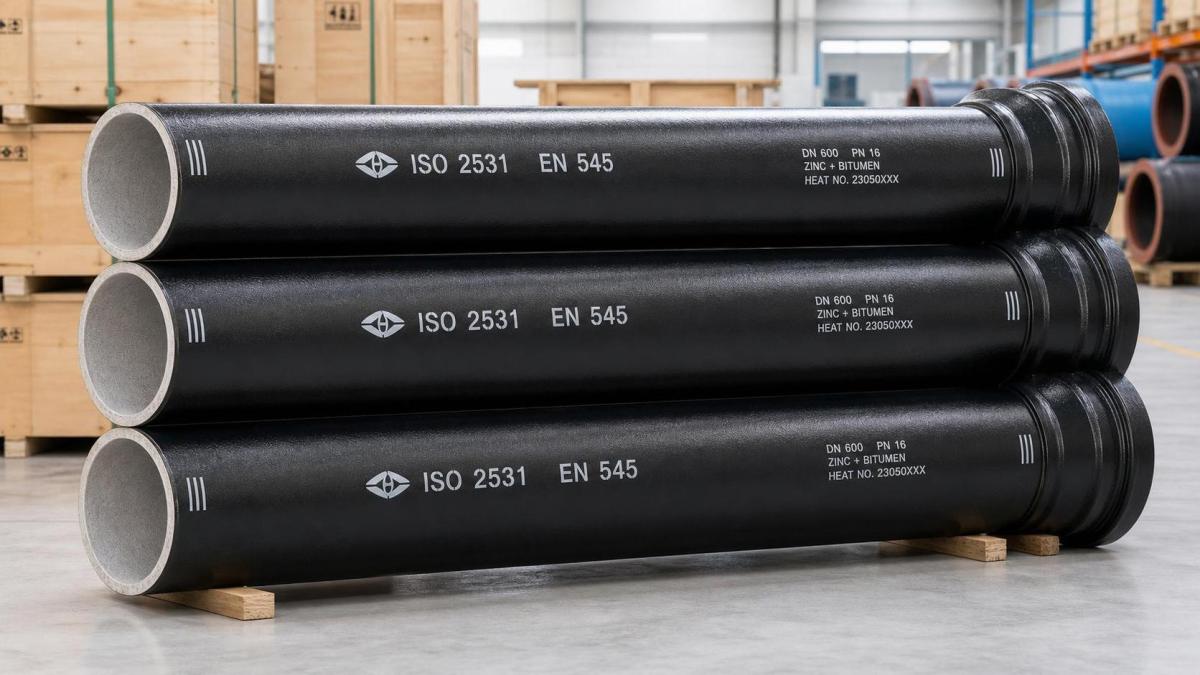
Water-supply and drainage projects are rarely forgiving when pipe specifications are incomplete. A pipe may look suitable by diameter and length, yet still create project risk if the pressure class, lining, coating, joint type, testing documents, or standard references do not match the tender file. For municipal buyers, EPC contractors, distributors, and utility procurement teams, Ductile Iron Pipe should be evaluated through both engineering requirements and document control.
This guide explains how buyers can approach standard references such as ISO 2531, EN 545, and EN 598 in practical procurement conversations. It does not claim that every pipe order automatically meets every standard, and it does not replace project engineering review. Instead, it helps buyers ask clearer questions before ordering so that the supplied material, paperwork, and inspection expectations align with the intended application.
Why Standards Matter in Ductile Iron Pipe Procurement
Ductile iron pipe is used in buried water pipelines, drinking water systems, wastewater networks, irrigation transmission, industrial water lines, and infrastructure renewal projects. In these applications, the pipe is part of a pressure and soil-interaction system. Buyers must consider not only internal water pressure, but also external loads, trench condition, bedding, corrosion exposure, joint behavior, and the expected service environment.
Standards create a shared technical language. They help define dimensions, pressure classification, coating and lining expectations, mechanical properties, inspection routines, and marking requirements. However, citing a standard in a product name or inquiry is not enough. The purchase order should state which standard applies, which parts of the standard are relevant, and what supporting documents the buyer expects to receive.
ISO 2531, EN 545, and EN 598: Different Project Contexts
ISO 2531 is often associated with ductile iron pipes, fittings, accessories, and joints for water applications. EN 545 is commonly referenced for water pipelines, while EN 598 is associated with sewerage applications. Buyers should confirm the actual project requirement rather than selecting a standard by habit. A drinking water project, a sewer line, and an industrial water-transfer project can have different expectations for lining, coating, joint type, and documentation.
When a buyer receives a quotation, the standard reference should be checked against the tender file or design document. If the project requires cement mortar lining, zinc coating, bitumen finishing, special external protection, or defined class requirements, those details should be listed clearly. If the project is in a market with local approval rules, the buyer should also confirm whether additional documentation or local acceptance procedures are required.
Pressure Class and Pipe Class Should Not Be Assumed
One of the most important buying decisions is class selection. Buyers may see terms such as K7, K8, K9, or other class descriptions depending on the standard and project language. These terms should not be treated as simple price categories. Class selection relates to pressure, wall thickness, handling, and installation expectations. The correct choice depends on engineering design, operating pressure, surge allowance, soil condition, installation depth, and safety margin.
Procurement teams should avoid changing class only to reduce cost unless the project engineer approves the change. A lower-cost alternative may appear attractive on a spreadsheet but create risk if it does not match the hydraulic or structural assumptions of the pipeline. When in doubt, buyers should request clarification from the designer or technical owner before confirming the order.
Lining, Coating, and Drinking Water Considerations
Lining and coating are not minor accessories. For many water applications, the inner lining protects the conveyed water and the pipe interior, while the outer coating helps protect the pipe in buried or exposed conditions. Cement mortar lining is commonly discussed in water pipeline procurement, but buyers should confirm the exact lining requirement, thickness expectations, curing condition, and any project-specific approval needs.
For drinking water applications, buyers should be especially careful with local health, safety, or water-contact requirements. A supplier's product description may identify the intended use, but the buyer remains responsible for ensuring that the project market accepts the proposed materials and documentation. If the destination country requires specific approvals or third-party documentation, those expectations should be included before the order is confirmed.
Fittings, Joints, and Field Installation Fit
A pipeline is more than straight pipe. Fittings, flanges, gaskets, bends, tees, and couplings must work with the pipe system. Buyers should verify compatibility between pipe and fittings before shipment, especially when sourcing from multiple suppliers. A small mismatch in joint type or gasket requirement can cause installation delays, additional local purchasing, or field modification.
Installation teams also need consistent marking and packing. If pipe lengths, diameters, or fittings are mixed without clear labels, site receiving becomes slower and more error-prone. For large infrastructure projects, the cost of confusion can be significant because equipment and labor may be waiting for the correct material to be identified.

Testing, Inspection, and Documentation Before Shipment
Buyers should define the inspection package before production or shipment. Depending on the project, this may include dimensional inspection, hydraulic testing, mechanical property records, coating inspection, lining checks, visual inspection, marking verification, and packing list control. The exact package should follow the project specification rather than a generic assumption.
It is also helpful to decide whether pre-shipment inspection is required. For high-volume public works, buyers may need documentation that supports customs clearance, site acceptance, and project audit trails. A clear document list protects both buyer and supplier by reducing last-minute requests after the goods are already packed.
Receiving inspection should also be planned before the shipment arrives. Site teams can compare pipe markings, diameter, class, coating condition, lining condition, and package labels against the packing list and purchase order. If any damage or inconsistency is found, photos and batch information should be recorded before installation begins. This disciplined receiving step helps protect the project schedule because problems are easier to discuss while the material is still in a controlled storage area.
For public water projects, documentation control is often as important as physical inspection. Project owners may need a traceable file that links each shipment to the approved specification, inspection record, and delivery note. Buyers should therefore treat paperwork as part of the product package. A pipe that arrives without usable documents can slow approval even when the physical material appears acceptable.
Standards-Oriented Buying Checklist
- Confirm the applicable standard and project specification before requesting the final quotation.
- Check nominal diameter, class, length, joint type, and fitting compatibility.
- Define inner lining, outer coating, special protection, and drinking-water requirements where relevant.
- List all required inspection reports and documents before order confirmation.
- Confirm pipe marking, bundle or package labeling, and packing list details.
- Review whether local market approvals or third-party inspection are required.
- Do not change class, lining, or coating for cost reasons without engineering approval.
- Check that the documentation matches the material before shipment, not only after arrival.
FAQ
Does a standard reference mean every project requirement is automatically covered?
No. A standard reference is a starting point. Buyers still need to confirm class, lining, coating, joint type, inspection documents, and any local approval requirements stated by the project.
Why are ISO 2531, EN 545, and EN 598 discussed separately?
They are commonly associated with different ductile iron pipe contexts, such as water and sewerage applications. Buyers should follow the project specification rather than selecting a standard by general familiarity.
What documents should buyers request?
The document list depends on the project. Common needs may include dimensional records, test reports, coating or lining inspection information, packing lists, and marking confirmation. Project-specific inspection requirements should be stated clearly.
Why is fitting compatibility important?
Ductile iron pipelines depend on joints, gaskets, flanges, and fittings working together. Incompatible components can delay installation and create field-acceptance problems.
Editorial Review Note
This article is buyer-facing standards guidance for ductile iron pipe procurement. It avoids fabricated prices, unsupported certification claims, invented project cases, and unverified performance guarantees.
Recommended News