Search News
Industry Portal
Hot Articles
- How water scarcity policy shapes the case for desalination projectsWater Scarcity policy is reshaping desalination investment. Explore how resilient, low-carbon water strategies can secure supply, compliance, and long-term growth.
- How to choose charging cables that resist damage in field useCharging cables for field use: learn how to choose durable, reliable options with the right jacket, strain relief, connector fit, power rating, and moisture protection.
- Which solid-state battery breakthroughs could extend EV driving range?Solid-state battery breakthroughs for electric vehicles could transform EV range. Explore lithium-metal anodes, scalable manufacturing, fast charging, and the road to commercialization.
Popular Tags
Industry NewsTechnical Checks Buyers Should Make Before Ordering Ductile Iron Pipe
auth.
Dr. Elena HydroTime
Jul 17, 2026Click Count
Industrial sourcing works best when the buyer connects product selection with real operating conditions. For municipal water authorities, EPC contractors, pipe distributors, infrastructure project buyers, and utility maintenance teams, Ductile Iron Pipe should be evaluated through application, inspection, delivery, storage, and after-arrival workflow. A catalog page can confirm the category, but the purchase order must explain how the item will be formed, installed, protected, maintained, or resold.
This article gives procurement teams a practical framework for evaluating the product without relying on fabricated prices, unsupported statistics, or exaggerated claims. It focuses on fields that can be checked before shipment: specification clarity, supplier communication, document control, packaging, and receiving discipline. The goal is to make the buying decision easier to review and safer to repeat.
Start With Pressure and Route Conditions
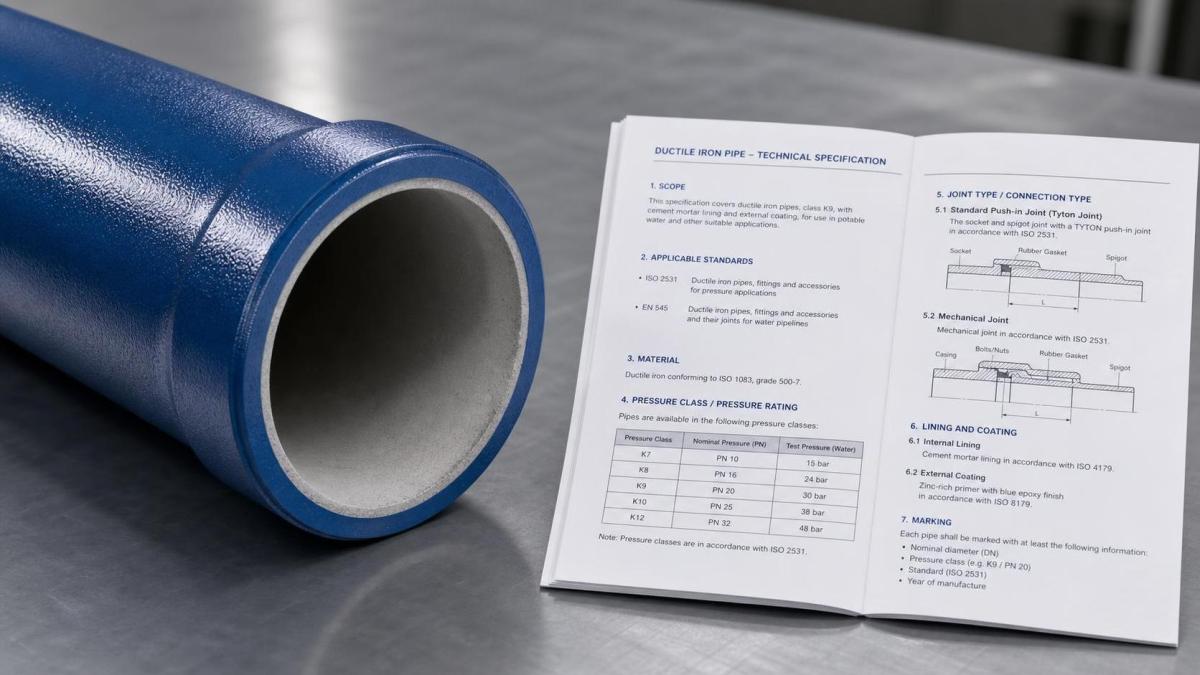
Start With Pressure and Route Conditions is where a buyer turns a product name into a practical specification. For municipal water authorities, EPC contractors, pipe distributors, infrastructure project buyers, and utility maintenance teams, the material or component is usually tied to water transmission, drinking water networks, buried pipelines, utility replacement, pressure service, and infrastructure projects. If the inquiry only lists a keyword and a target price, the supplier may not see the service condition, processing route, packing risk, or document requirement that determines whether the order works after arrival.
The main risk is wrong pressure class, joint mismatch, lining damage, coating omission, rough unloading, and incomplete acceptance documents. These issues are easier to prevent during quotation than to solve after shipment. A stronger request records the application, key technical fields, inspection expectations, label format, and packing method before the quotation is treated as final. This gives the buyer a fairer basis for comparing suppliers.
Buyers should treat class selection, joint type, lining and coating, pressure requirement, handling method, and inspection records as connected decisions. When one field changes, the team should review its effect on cost, lead time, receiving, processing, installation, and resale. This habit is especially useful for repeat orders because it prevents silent specification drift between batches and keeps communication factual.
Match Joint Type to Installation Method
Match Joint Type to Installation Method is where a buyer turns a product name into a practical specification. For municipal water authorities, EPC contractors, pipe distributors, infrastructure project buyers, and utility maintenance teams, the material or component is usually tied to water transmission, drinking water networks, buried pipelines, utility replacement, pressure service, and infrastructure projects. If the inquiry only lists a keyword and a target price, the supplier may not see the service condition, processing route, packing risk, or document requirement that determines whether the order works after arrival.
The main risk is wrong pressure class, joint mismatch, lining damage, coating omission, rough unloading, and incomplete acceptance documents. These issues are easier to prevent during quotation than to solve after shipment. A stronger request records the application, key technical fields, inspection expectations, label format, and packing method before the quotation is treated as final. This gives the buyer a fairer basis for comparing suppliers.
Buyers should treat class selection, joint type, lining and coating, pressure requirement, handling method, and inspection records as connected decisions. When one field changes, the team should review its effect on cost, lead time, receiving, processing, installation, and resale. This habit is especially useful for repeat orders because it prevents silent specification drift between batches and keeps communication factual.
Review Lining and External Coating

Review Lining and External Coating is where a buyer turns a product name into a practical specification. For municipal water authorities, EPC contractors, pipe distributors, infrastructure project buyers, and utility maintenance teams, the material or component is usually tied to water transmission, drinking water networks, buried pipelines, utility replacement, pressure service, and infrastructure projects. If the inquiry only lists a keyword and a target price, the supplier may not see the service condition, processing route, packing risk, or document requirement that determines whether the order works after arrival.
The main risk is wrong pressure class, joint mismatch, lining damage, coating omission, rough unloading, and incomplete acceptance documents. These issues are easier to prevent during quotation than to solve after shipment. A stronger request records the application, key technical fields, inspection expectations, label format, and packing method before the quotation is treated as final. This gives the buyer a fairer basis for comparing suppliers.
Buyers should treat class selection, joint type, lining and coating, pressure requirement, handling method, and inspection records as connected decisions. When one field changes, the team should review its effect on cost, lead time, receiving, processing, installation, and resale. This habit is especially useful for repeat orders because it prevents silent specification drift between batches and keeps communication factual.
Plan Handling for Heavy Pipe
Plan Handling for Heavy Pipe is where a buyer turns a product name into a practical specification. For municipal water authorities, EPC contractors, pipe distributors, infrastructure project buyers, and utility maintenance teams, the material or component is usually tied to water transmission, drinking water networks, buried pipelines, utility replacement, pressure service, and infrastructure projects. If the inquiry only lists a keyword and a target price, the supplier may not see the service condition, processing route, packing risk, or document requirement that determines whether the order works after arrival.
The main risk is wrong pressure class, joint mismatch, lining damage, coating omission, rough unloading, and incomplete acceptance documents. These issues are easier to prevent during quotation than to solve after shipment. A stronger request records the application, key technical fields, inspection expectations, label format, and packing method before the quotation is treated as final. This gives the buyer a fairer basis for comparing suppliers.
Buyers should treat class selection, joint type, lining and coating, pressure requirement, handling method, and inspection records as connected decisions. When one field changes, the team should review its effect on cost, lead time, receiving, processing, installation, and resale. This habit is especially useful for repeat orders because it prevents silent specification drift between batches and keeps communication factual.
Check Fittings and Accessories
Check Fittings and Accessories is where a buyer turns a product name into a practical specification. For municipal water authorities, EPC contractors, pipe distributors, infrastructure project buyers, and utility maintenance teams, the material or component is usually tied to water transmission, drinking water networks, buried pipelines, utility replacement, pressure service, and infrastructure projects. If the inquiry only lists a keyword and a target price, the supplier may not see the service condition, processing route, packing risk, or document requirement that determines whether the order works after arrival.
The main risk is wrong pressure class, joint mismatch, lining damage, coating omission, rough unloading, and incomplete acceptance documents. These issues are easier to prevent during quotation than to solve after shipment. A stronger request records the application, key technical fields, inspection expectations, label format, and packing method before the quotation is treated as final. This gives the buyer a fairer basis for comparing suppliers.
Buyers should treat class selection, joint type, lining and coating, pressure requirement, handling method, and inspection records as connected decisions. When one field changes, the team should review its effect on cost, lead time, receiving, processing, installation, and resale. This habit is especially useful for repeat orders because it prevents silent specification drift between batches and keeps communication factual.
Prepare Acceptance Documents
Prepare Acceptance Documents is where a buyer turns a product name into a practical specification. For municipal water authorities, EPC contractors, pipe distributors, infrastructure project buyers, and utility maintenance teams, the material or component is usually tied to water transmission, drinking water networks, buried pipelines, utility replacement, pressure service, and infrastructure projects. If the inquiry only lists a keyword and a target price, the supplier may not see the service condition, processing route, packing risk, or document requirement that determines whether the order works after arrival.
The main risk is wrong pressure class, joint mismatch, lining damage, coating omission, rough unloading, and incomplete acceptance documents. These issues are easier to prevent during quotation than to solve after shipment. A stronger request records the application, key technical fields, inspection expectations, label format, and packing method before the quotation is treated as final. This gives the buyer a fairer basis for comparing suppliers.
Buyers should treat class selection, joint type, lining and coating, pressure requirement, handling method, and inspection records as connected decisions. When one field changes, the team should review its effect on cost, lead time, receiving, processing, installation, and resale. This habit is especially useful for repeat orders because it prevents silent specification drift between batches and keeps communication factual.
Practical Buyer Evaluation Table
Pre-Order Checklist
- Define the final application, service environment, and receiving process before asking for a final quotation.
- Confirm the core specification fields in writing, including size, grade, surface, model, coating, packaging, or structure as relevant.
- Ask which assumptions are included in the quotation and which items require separate confirmation.
- Request drawings, labels, inspection records, packing photos, or sample output when the order has project or resale risk.
- Plan unloading, storage, installation, and internal handling before the shipment arrives.
- Keep a repeat-order record so future purchases can follow the approved specification.
FAQ
Why is pressure class important?
It connects pipe selection with system pressure, soil conditions, and project design.
Should fittings be ordered with the pipe?
Often yes. Matching fittings, gaskets, and accessories reduces installation delays.
What documents help project acceptance?
Buyers may need specification confirmation, inspection records, packing lists, labels, and agreed test references.
Recommended News