Search News
Industry Portal
Hot Articles
- How water scarcity policy shapes the case for desalination projectsWater Scarcity policy is reshaping desalination investment. Explore how resilient, low-carbon water strategies can secure supply, compliance, and long-term growth.
- How to choose charging cables that resist damage in field useCharging cables for field use: learn how to choose durable, reliable options with the right jacket, strain relief, connector fit, power rating, and moisture protection.
- Which solid-state battery breakthroughs could extend EV driving range?Solid-state battery breakthroughs for electric vehicles could transform EV range. Explore lithium-metal anodes, scalable manufacturing, fast charging, and the road to commercialization.
Popular Tags
Industry NewsThe Hidden Costs Behind Low Industrial Wastewater Quotes
auth.
Dr. Elena HydroTime
Apr 23, 2026Click Count
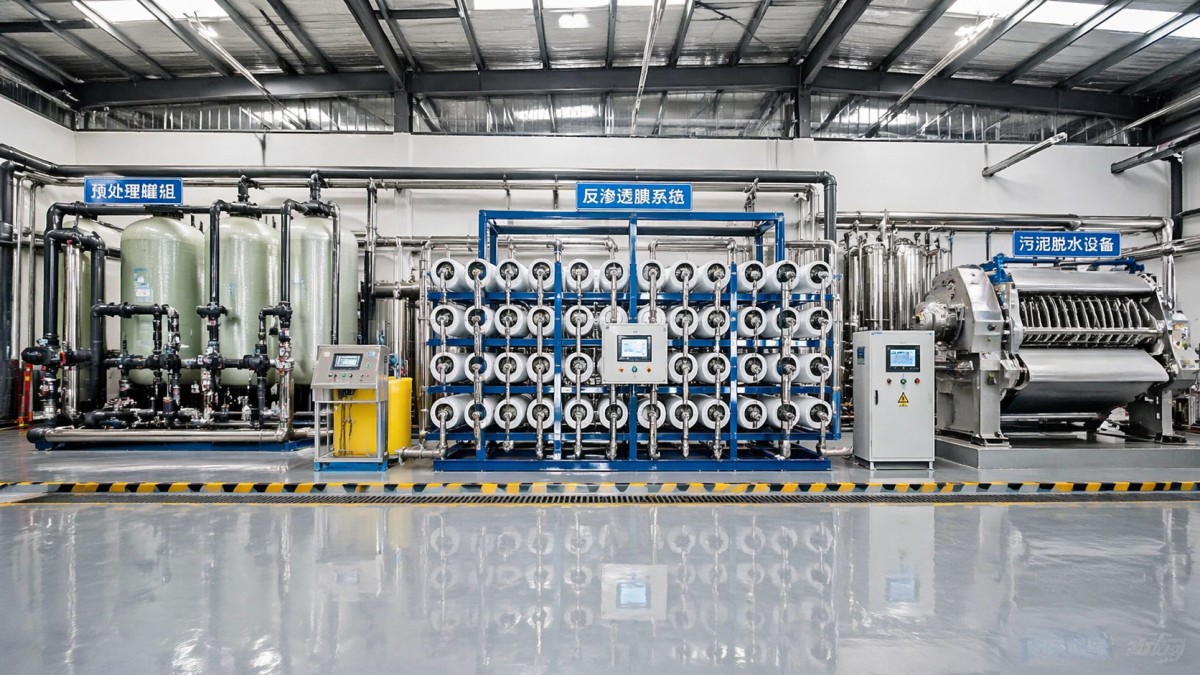
A low Industrial Wastewater treatment cost quote can look attractive—until hidden risks surface in uptime, energy use, sludge disposal, and Regulatory Standards compliance. From Reverse Osmosis membrane specifications to Sludge Treatment equipment and High-Pressure Piping design, the real price of failure is often paid later. This article helps decision-makers compare Industrial Wastewater recycling systems and Advanced Water Treatment solutions with a sharper, lifecycle-based perspective.
Why a Low Industrial Wastewater Quote Often Becomes an Expensive Project

In industrial water projects, the cheapest quotation rarely reflects the full cost of ownership. A supplier may reduce the visible price by simplifying pretreatment, under-sizing pumps, using lower-grade valves, omitting automation points, or excluding sludge handling equipment from the base scope. On paper, the project looks competitive. In operation, the plant pays through unstable water quality, more frequent shutdowns, membrane fouling, spare-part dependence, and non-compliance risk.
This matters across sectors because Industrial Wastewater quality varies widely. Food processing, pharmaceuticals, electroplating, textiles, mining, semiconductor production, pulp and paper, and municipal-industrial interface projects all present different combinations of COD, TDS, oil, heavy metals, suspended solids, and pH swings. A quote that ignores variability over a 12–24 month operating cycle may look attractive during procurement but fail during seasonal or batch-load changes.
For operators, the hidden cost appears as additional cleaning frequency, longer start-up troubleshooting, and unplanned maintenance. For decision-makers, it appears in higher energy intensity, larger chemical spend, and shorter asset life. For quality and safety teams, it appears in discharge deviations, sludge storage pressure, and permit exposure. For distributors and project managers, it often appears as warranty disputes and delayed handover.
G-WIC approaches these projects through a benchmarking lens rather than a quote-only lens. That means comparing Industrial Wastewater reclaim systems, ZLD-related equipment, High-Pressure Piping hardware, digital monitoring architecture, and sludge valorization pathways against ISO, AWWA, and EN-aligned expectations where relevant. The central question is not “What is the lowest bid?” but “What design can still perform after 8,000–8,760 annual operating hours?”
- A low quote may exclude equalization capacity, even though 6–24 hours of buffering can determine whether downstream RO runs steadily.
- It may assume standard membranes where high-fouling wastewater requires more robust pretreatment or staged recovery design.
- It may price sludge dewatering only, while actual compliance requires transport, drying, or licensed disposal coordination.
- It may not include instrumentation redundancy, making troubleshooting slow and data quality weak.
The difference between upfront price and lifecycle cost
Lifecycle cost in Advanced Water Treatment typically includes five recurring layers: energy, chemicals, labor, membranes or media replacement, and sludge management. If a quotation only optimizes capital expenditure, the operator may inherit a system that consumes more kWh per cubic meter, requires CIP too frequently, or generates concentrated waste streams that are costly to handle. Over 3–7 years, these costs can outweigh the initial savings many times over.
In practical terms, a system with weak solids separation upstream of RO may suffer flux decline quickly. The initial bid looks lower because the pretreatment train is simplified. But the plant later pays through higher differential pressure, lower recovery, more downtime, and earlier membrane replacement. That is not an equipment issue alone; it is a quotation structure issue.
Which Hidden Cost Drivers Should Buyers Evaluate Before Comparing Quotes?
Before comparing suppliers, procurement teams should separate visible price from hidden cost drivers. At minimum, evaluate 5 core dimensions: influent variability, process recovery target, energy profile, sludge volume pathway, and compliance margin. A quote that does not define assumptions for these five areas is not truly comparable to another quote, even if both appear to treat the same daily flow rate.
Influent variability is one of the most overlooked factors. Many low Industrial Wastewater quotes are based on idealized feed conditions rather than worst-case loads. If conductivity, oil content, suspended solids, or temperature moves outside the design basis, the system may consume more chemicals or fail to achieve target recovery. Good procurement practice requires both average and peak operating envelopes, not a single design point.
Another hidden cost comes from materials of construction. Lower-grade piping, seals, tanks, or pressure-bearing components may be adequate for neutral water but not for corrosive wastewater, high chloride levels, oxidizing chemistries, or elevated temperatures such as 35°C–45°C. When materials are not matched to the application, leaks, corrosion, scaling, and premature replacement become operational and safety issues rather than simple maintenance tasks.
The table below summarizes common areas where a low quote can shift cost from the supplier’s proposal to the owner’s future operating budget. This comparison is especially useful for project leaders evaluating multiple Industrial Wastewater recycling systems with different process boundaries.
A buyer who reviews these line items early can avoid a common trap: comparing quotes with different scope boundaries as if they were equal. In B2B water infrastructure, the real issue is scope clarity. A quote that appears 10%–20% lower may ultimately transfer much larger operational exposure to the end user.
Five checks before accepting a “competitive” offer
- Confirm whether the design basis includes average, peak, and upset influent conditions.
- Check whether sludge handling stops at dewatering or extends to drying, storage, and disposal interface.
- Review membrane, pump, and piping material assumptions against actual chemistry and temperature.
- Ask for estimated maintenance intervals, CIP frequency, and spare-part list for the first 12 months.
- Verify what monitoring points are included for conductivity, pressure, flow, pH, turbidity, and critical alarms.
How Technical Choices Influence Uptime, Recovery, and Compliance
A low Industrial Wastewater quote often narrows attention to one target, such as daily treatment capacity, while ignoring system stability. Yet long-term project value is driven by three operating outcomes: consistent uptime, realistic water recovery, and dependable compliance. These outcomes depend heavily on technical choices in pretreatment, membrane staging, hydraulic design, sludge handling, and monitoring logic.
Take Reverse Osmosis as an example. Buyers often focus on nominal rejection, but membrane performance in industrial reuse depends on feed pretreatment quality, scaling tendency, organic load, temperature, cleaning protocol, and recovery target. If the quote promises high recovery without a matching antiscalant strategy, concentrate management plan, and robust feed conditioning, the advertised savings may not survive the first few months of operation.
High-Pressure Piping is another frequent under-specified area. Pipe rating, joint integrity, corrosion resistance, surge control, and support design all affect safety and reliability. In systems with repeated starts, variable loads, or concentrate service, inadequate piping specification can create vibration, leakage, or premature failure. A cheaper line item may therefore introduce higher risk in both maintenance and plant safety management.
Sludge Treatment equipment also deserves more attention than many low bids give it. A system that treats water but leaves the site with rising wet sludge volume is only solving part of the problem. Depending on the industry, moving from basic dewatering to more advanced drying or valorization can materially reduce downstream logistics and disposal pressure. For many plants, this becomes a deciding factor within 6–18 months after commissioning.
Technical parameters that deserve line-by-line review
The table below helps information researchers, operators, and engineering managers compare Advanced Water Treatment quotations beyond the surface price. These are not brand-specific numbers. They are decision checkpoints that should be explicitly clarified during technical review.
When these parameters are transparent, buyers can compare quotations on engineering merit rather than on appearance alone. This is where G-WIC’s multidisciplinary framework is especially useful: membrane systems, pumping architecture, digital monitoring, storage, and sludge pathways should be assessed as one operating ecosystem, not as isolated purchase lines.
Why monitoring architecture matters more than many buyers expect
A cheaper system may save money by reducing sensors, alarm layers, or data logging functions. But this creates blind spots. Without trend visibility on pressure, conductivity, flow, or tank levels, root-cause analysis becomes slower and more expensive. In facilities managing 2 shifts, 3 shifts, or continuous operation, every hour of diagnostic delay affects production planning as well as water compliance.
Smart Water Management and digital twin-ready platforms do not always require overly complex deployments. Even a practical framework with key online measurements, alarm history, and maintenance logs can significantly improve operating discipline. For project managers and safety teams, this visibility supports handover, audits, and vendor performance evaluation.
How to Compare Industrial Wastewater Quotes in a Procurement-Ready Way
A disciplined comparison method protects both budget and project schedule. Instead of asking suppliers for a lower number, ask them for a more complete basis. For most projects, a practical review can be organized into 4 stages: influent definition, process boundary review, operating cost clarification, and compliance validation. This approach gives procurement teams a defensible way to compare offers from EPC contractors, OEMs, integrators, and regional distributors.
For information researchers and distributors, documentation quality is also a key signal. A quotation should define design assumptions, exclusion items, utility requirements, control scope, commissioning support, spare-part expectations, and operator training. If these areas are missing, the low price may simply indicate that important responsibilities are being left unresolved for later contract negotiation.
- Water Infrastructure
- Water Treatment
- Industrial Wastewater
- High-Pressure Piping
- Smart Water Management
- Digital Twin
- Sludge Treatment
- Reverse Osmosis
- Industrial Water
- Regulatory Standards
- Reverse Osmosis membrane specifications
- Advanced Water Treatment solutions
- Industrial Wastewater recycling systems
- Sludge Treatment equipment
- Industrial Wastewater treatment cost
- High-Pressure Piping design
- Regulatory Standards compliance
Recommended News